How Can We Help You?

What Are the 2026 Top Automation Controls for Global Buyers?

As global factories pursue higher output with fewer disruptions, automation controls are becoming strategic purchasing decisions rather than simple component choices. The International Federation of Robotics reported 541,302 industrial robot installations in 2023, with more than 4.28 million robots operating worldwide. Each machine depends on dependable control architecture, clear diagnostics, and safe communication with surrounding equipment. The question is practical: which systems will deliver measurable value in 2026?

This guide examines the leading automation controls for global buyers, including PLCs, PACs, DCS platforms, motion controllers, safety systems, and industrial edge devices. It considers scan speed, expandability, cybersecurity, cloud connectivity, lifecycle support, and compatibility with IEC 61131-3 programming practices. Deloitte’s 2024 Smart Manufacturing survey found that 92% of surveyed executives viewed smart manufacturing as a major competitiveness driver during the next three years. That ambition requires more than buying the newest controller. It requires evidence from real production environments.

Rockwell Automation’s 2024 State of Smart Manufacturing report also indicated that 95% of manufacturers had invested, or planned to invest, in artificial intelligence and machine learning. Yet software intelligence cannot repair weak sensors, poor network design, or unclear maintenance procedures. That limitation matters. A technically impressive platform may still create expensive downtime when local support is unavailable. Therefore, this comparison focuses on verified capabilities, regional service networks, integration experience, and total ownership costs. No ranking is perfect. Buyer priorities differ sharply between a food plant in Germany, a battery line in South Korea, and a packaging facility in Brazil. The strongest choice is not always the most advanced one. It is the one that remains reliable, secure, maintainable, and measurable under real operating conditions.

What Are the 2026 Top Automation Controls for Global Buyers?

2026 Automation Controls Market: IFR Reports 542,000 Robot Installations

What Are the 2026 Top Automation Controls for Global Buyers?

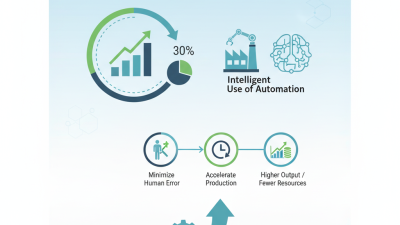
The 2026 automation controls market is entering a demanding phase. According to IFR reports, 542,000 robots were installed worldwide. This figure signals strong industrial investment, but it does not guarantee easy integration. Buyers still need controls that connect robots, sensors, drives, and safety systems without creating fragile networks.

Reliable automation controls should support real-time communication, accurate motion control, and clear diagnostic data. A factory floor may include dusty conveyors, temperature changes, and frequent production shifts. Controls must continue working under these conditions. Modular designs also matter. They allow engineers to replace one unit without stopping an entire line.

Safety deserves equal attention. Emergency stops, guarded zones, and controlled restart functions should be tested during commissioning. Cybersecurity is becoming practical equipment care, not just an office concern. Secure access, software updates, and user permissions can reduce avoidable interruptions. Small details matter.

Global buyers should also examine local service coverage, spare-part availability, and training quality. A low purchase price may become expensive when troubleshooting takes days. I have seen projects focus heavily on hardware specifications and overlook operator experience. That mistake can weaken productivity. Another concern is over-automation. More robots do not always mean better output. The right control platform should match product variety, workforce skills, maintenance habits, and long-term expansion plans. Metrics must be checked after installation, not only promised before purchase.

Comparing PLC, PAC, DCS, and SCADA by IEC 61131-3 Compatibility

What Are the 2026 Top Automation Controls for Global Buyers?

Comparing PLC, PAC, DCS, and SCADA by IEC 61131-3 Compatibility

IEC 61131-3 compatibility is becoming a practical buying filter, not a checkbox. The standard defines Structured Text, Ladder Diagram, Function Block Diagram, and Sequential Function Chart. These languages support consistent engineering across many industrial control projects. Yet compatibility does not guarantee direct code portability. Runtime libraries, scan behavior, and safety functions still vary.

PLCs usually offer the clearest IEC 61131-3 implementation for machine-level control. PACs extend this model with motion, networking, and data processing. Their language support can be broader, but proprietary libraries may reduce portability. DCS platforms often use IEC-style function blocks for continuous processes. However, configuration tools may remain platform-specific. SCADA systems supervise equipment through drivers, tags, and scripts. They are not normally IEC 61131-3 control runtimes. Not always.

MarketsandMarkets estimated the PLC market at about USD 12.9 billion in 2024, with projected growth to USD 16.6 billion by 2029. Grand View Research valued the wider industrial automation market at approximately USD 211.3 billion in 2023. Those figures show strong demand, but they do not prove equal interoperability.

Buyers should request a tested code sample, including alarms, timers, motion blocks, and online diagnostics. Check whether engineers can export, inspect, and reuse the project without hidden licenses. Field evaluations often miss this detail.

That is the uncomfortable part. A control system may claim IEC 61131-3 support while still requiring extensive redevelopment during migration.

Motion Control: IEA Attributes 53% of Global Electricity Use to Motor Systems

Global buyers are reassessing automation controls through energy performance, not only speed and precision. The International Energy Agency attributes 53% of global electricity use to motor systems. That figure changes the purchasing conversation.

Motion control includes motors, drives, gear systems, sensors, and control software. Together, they determine how much energy a machine consumes during every acceleration, pause, and load change. The U.S. Department of Energy reports that optimized motor systems can often reduce energy use by 20% to 30%. The savings are practical: fewer oversized motors, smoother ramping, and less heat around the cabinet. Small improvements repeat thousands of times daily.

Tips: Ask suppliers for measured efficiency across the full operating cycle. Request data for standby, partial-load, and peak-load conditions. Check whether the control system supports real-time monitoring and predictive maintenance. IEC 61800-9-2 provides a useful framework for comparing drive-system efficiency. Yet efficiency labels alone can mislead. A highly efficient motor may still waste energy when poorly matched with its load. This is where buyers need evidence, not attractive claims.

The IEA also emphasizes system-level efficiency, including correct sizing and variable-speed control. In field audits, installation quality often decides whether expected savings appear. Cable losses, poor tuning, and excessive starts remain common. That is an uncomfortable gap between catalogue performance and factory reality. Global buyers should compare lifecycle energy costs, service access, data transparency, and control flexibility before selecting automation equipment.

Safety and OT Cybersecurity: Apply ISO 13849, IEC 61508, and IEC 62443

What Are the 2026 Top Automation Controls for Global Buyers?

Safety and OT cybersecurity now belong in the same purchasing conversation. ISO 13849 helps engineers design safety-related control systems around risk, performance levels, and validated functions. A guard switch is not enough. The full chain matters, from the sensor to the logic unit and final actuator. During a machine review, teams should test emergency stops, access doors, reset behavior, and fault response under realistic conditions. Small wiring assumptions can create serious gaps.

IEC 61508 adds a functional safety lifecycle for electrical, electronic, and programmable systems. It supports hazard analysis, safety integrity levels, verification, and documented competence. Buyers should request evidence, not polished claims. Ask how requirements were allocated, tested, and maintained after software changes. A spreadsheet may look complete while missing a dangerous operating mode. That weakness deserves attention.

IEC 62443 addresses industrial cybersecurity through zones, conduits, secure development, access control, and ongoing monitoring. Practical controls include unique accounts, separated networks, controlled remote access, tested backups, and rapid patch assessment. Cybersecurity cannot be treated as a final factory inspection. It must continue through commissioning, maintenance, and retirement. No framework removes every uncertainty. Human error, incomplete asset lists, and outdated drawings still appear in well-managed plants. Global buyers should compare traceable evidence, supplier responsibilities, and local operating realities before approving automation controls.

What Are the 2026 Top Automation Controls for Global Buyers? – Safety and OT Cybersecurity: Apply ISO 13849, IEC 61508, and IEC 62443
Control Area Buyer Requirement Primary Standard Recommended Control Practice Objective Evidence Suggested KPI or Acceptance Metric Priority
Risk Assessment and Safety Function Definition Identify machine hazards, hazardous events, operating modes, and required risk-reduction measures before purchasing or integrating automation equipment. ISO 13849-1
IEC 61508
Document each safety function, its initiating event, safe state, required response time, and target performance level or safety integrity level. Approved risk assessment, safety requirement specification, operating-mode analysis, and traceability matrix. 100% of safety functions linked to a documented hazard and validated requirement. Critical
Safety Integrity and Performance Level Verification Require the supplier to demonstrate that safety-related control systems achieve the specified PL or SIL for each applicable safety function. ISO 13849-1
IEC 61508
Evaluate architecture, diagnostic coverage, component reliability data, common-cause failure controls, and systematic capability. PL or SIL calculation, safety manual, reliability assumptions, architecture diagram, and independent verification record. Every applicable safety function meets or exceeds its specified PLr or SIL target. Critical
Safety Function Validation Confirm that implemented safety functions operate correctly under normal, abnormal, fault, restart, and maintenance conditions. ISO 13849-2
IEC 61508
Perform documented validation tests, including emergency stop, guard interlock, enabling device, safe speed, and controlled stop functions where applicable. Validation plan, test results, fault-injection records, safety circuit inspection, and signed acceptance report. 100% of safety functions pass validation before production release and after safety-related changes. Critical
Functional Safety Lifecycle Management Maintain safety requirements, design decisions, testing, modification control, and decommissioning activities throughout the automation lifecycle. IEC 61508 Use formal management of functional safety with assigned roles, competence requirements, lifecycle gates, and change-impact assessments. Functional safety management plan, competence records, lifecycle review minutes, and change approvals. All safety-related changes receive documented impact analysis and revalidation before release. High
Safety-Related Software Development Control the design, implementation, verification, and versioning of software that can affect a safety function. IEC 61508
ISO 13849-1
Apply documented coding, configuration, review, testing, access control, and version-management practices appropriate to the safety integrity target. Software safety plan, source-code or logic review records, test coverage report, approved versions, and configuration baseline. 100% of deployed safety logic is traceable to an approved version and test record. Critical
Asset Inventory and System Boundary Definition Maintain an accurate inventory of controllers, safety devices, engineering workstations, network equipment, remote-access paths, and software dependencies. IEC 62443-2-1
IEC 62443-3-2
Define automation zones and conduits, record asset ownership and criticality, and identify connections between OT, IT, safety, and external networks. Asset register, network topology, data-flow diagram, zone-and-conduit model, and criticality classification. At least 98% of discovered OT assets reconciled with the approved inventory; all external connections documented. Critical
Network Segmentation and Secure Architecture Prevent unauthorized movement between enterprise systems, industrial control networks, safety systems, and vendor-access environments. IEC 62443-3-2
IEC 62443-3-3
Implement documented zones and conduits, deny-by-default firewall rules, controlled data flows, and separation of safety-related networks where risk requires it. Approved architecture, firewall rule review, segmentation test results, and exception register. 100% of permitted cross-zone traffic has an owner, business purpose, and periodic review date. Critical
Identity, Authentication, and Least Privilege Ensure that only authorized and appropriately trained personnel can access automation and safety-related systems. IEC 62443-3-3
IEC 62443-2-1
Use unique accounts, role-based access, strong authentication for remote or privileged access, controlled shared accounts, and timely access removal. Access-control matrix, user review records, authentication configuration, joiner-mover-leaver records, and privileged-session logs. 100% of privileged accounts reviewed at least quarterly; terminated-user access removed within one business day. Critical
Secure Remote Access Allow remote support only when necessary, authorized, time-limited, monitored, and technically restricted to approved assets. IEC 62443-3-3
IEC 62443-2-1
Require documented approval, multi-factor authentication where feasible, jump-host access, session logging, least privilege, and automatic expiry. Remote-access procedure, approval tickets, session logs, vendor-account list, and periodic access review. 100% of remote sessions have an approved ticket, named user, defined scope, and recorded start and end time. Critical
Vulnerability and Patch Management Reduce exposure to known vulnerabilities without compromising validated safety functions or production stability. IEC 62443-2-3
IEC 62443-3-3
Use risk-based vulnerability assessment, compensating controls for unsupported assets, maintenance-window testing, rollback plans, and documented patch exceptions. Vulnerability register, patch-impact assessment, test results, exception approvals, and remediation plan. Critical exploitable findings have an owner and treatment plan within 15 calendar days, unless an approved exception exists. High
Malware Protection and Removable Media Control Control software introduction and removable-media use on industrial workstations and controllers where technically feasible. IEC 62443-3-3
IEC 62443-2-1
Authorize media, scan files before use, restrict automatic execution, maintain offline scanning procedures, and document approved transfer methods. Removable-media policy, scan records, media register, endpoint configuration, and exception approvals. 100% of removable-media events are logged and linked to an authorized user or work order. High
System Hardening and Secure Configuration Minimize unnecessary services, ports, accounts, protocols, and default settings on automation assets. IEC 62443-3-3
IEC 62443-2-1
Apply approved configuration baselines, disable unused services, change default credentials, restrict administrative interfaces, and protect configuration backups. Hardening checklist, baseline configuration, deviation report, configuration backup, and verification scan. All critical assets have an approved baseline; deviations are risk-assessed and time-bound. High
Security Monitoring and Event Detection Detect unauthorized access, abnormal network behavior, configuration changes, malware indicators, and safety-system events. IEC 62443-3-3
IEC 62443-2-1
Collect relevant logs, synchronize time, define alert thresholds, protect log integrity, and monitor high-value OT assets without disrupting deterministic operations. Logging standard, time-synchronization evidence, alert rules, monitoring coverage report, and sample investigation records. At least 95% of identified critical OT assets provide required security events to the monitoring process. High
Incident Response and Recovery Restore safe and reliable operation after cyber incidents, equipment failures, or unauthorized changes. IEC 62443-2-1
IEC 62443-3-3
Maintain OT-specific response playbooks, isolate affected zones, preserve evidence, define manual-safe-state procedures, and test recovery from clean backups. Incident-response plan, exercise report, recovery test, backup verification, and lessons-learned record. Recovery procedures tested at least annually and after major architecture changes; critical backups successfully restored. Critical
Backup, Restore, and Configuration Integrity Protect the availability and integrity of PLC logic, safety configurations, HMI projects, recipes, network settings, and engineering files. IEC 62443-3-3
IEC 61508
Maintain versioned, access-controlled, malware-checked, and offline or otherwise isolated backups, with documented restoration procedures. Backup schedule, hash or integrity records, access logs, retention policy, and restoration test report. 100% of critical configurations have a current verified backup and documented restoration owner. Critical
Supplier Security and Component Lifecycle Require suppliers and integrators to provide security, safety, vulnerability, support, and end-of-life information for delivered systems. IEC 62443-2-4
IEC 61508
Include security and functional-safety requirements in procurement documents, define notification duties, require update guidance, and assess unsupported components. Contract clauses, supplier security questionnaire, product security documentation, lifecycle statement, and vulnerability-notification process. 100% of high-criticality purchases include documented security and safety acceptance criteria before award. High
Personnel Competence and Operational Discipline Ensure engineering, maintenance, operations, and cybersecurity personnel are competent to perform assigned safety and OT security tasks. IEC 61508
IEC 62443-2-1
Define role-based training, authorization levels, refresher intervals, supervised work requirements, and escalation responsibilities. Training matrix, competency assessments, authorization records, drills, and refresher-training evidence. 100% of personnel performing safety-related or privileged OT activities meet current competency requirements. High
Management of Change and Periodic Revalidation Prevent unassessed changes to hardware, software, network architecture, safety logic, or operating procedures from creating unacceptable risk. ISO 13849-1
IEC 61508
IEC 62443-2-1
Require change classification, safety and cybersecurity impact assessment, testing, approval, rollback planning, documentation updates, and post-change review. Change request, impact assessment, test evidence, approval record, updated drawings, and revalidation report. 100% of safety- or security-relevant changes are approved and validated before operational use. Critical
Scope note: ISO 13849 focuses on safety-related parts of control systems, IEC 61508 provides a general functional-safety lifecycle and safety-integrity framework, and the IEC 62443 series addresses cybersecurity for industrial automation and control systems. The applicable edition, legal requirements, sector rules, and target PL or SIL should be confirmed for each project.

Global Buyer Matrix: Rank Interoperability, Lifecycle Cost, and ROI

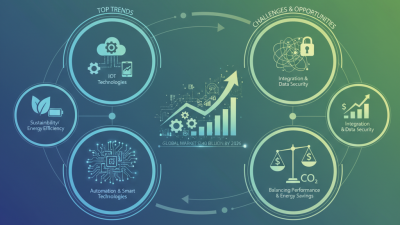
A 2026 automation-control matrix should rank interoperability before headline speed. The control platform must exchange data through open industrial protocols, standard APIs, and documented information models. This reduces custom gateways during line expansion. The International Data Corporation’s 2024 manufacturing outlook identifies connected operations as a major investment priority, but integration remains a common execution barrier. That warning matters.

Lifecycle cost deserves equal weight. Buyers should measure engineering hours, spare-part variety, cybersecurity updates, training, energy use, and five-year downtime exposure. Deloitte’s 2024 Smart Manufacturing and Operations Survey found that 92% of manufacturers view smart manufacturing as important for future competitiveness. Yet technology value often disappears when technicians need separate tools for one production cell. A simple test helps: estimate the cost of replacing one controller, updating firmware, and restoring validated recipes.

ROI should combine measurable gains with operational risk. Use baseline figures for changeover time, unplanned stoppages, scrap, and maintenance labor. The U.S. Department of Energy’s Better Plants program has documented industrial energy savings through structured measurement and continuous improvement, showing why verified baselines matter. Some suppliers may promise rapid payback. Be careful. A three-month return can look attractive until integration labor and operator training are added.

A practical scoring model might assign 40% to interoperability, 35% to lifecycle cost, and 25% to ROI evidence. Adjust it for safety-critical lines. The weighting is imperfect. Field experience often exposes costs that spreadsheets miss.