
How Can We Help You?

What Is the Best Longer Laser Cutter from China?

Choosing the best Longer Laser Cutter from China requires more than comparing wattage and advertised cutting speed. The decision should match the material, work area, production volume, and available workshop space. A machine designed for acrylic signage may not suit plywood furniture or stainless-steel components. That distinction matters.

Industry forecasts show strong demand for laser processing equipment. Fortune Business Insights estimated the global laser cutting machine market at approximately USD 5.19 billion in 2023. Its report projects continued growth through 2032, supported by automation, manufacturing investment, and demand for accurate cutting. Mordor Intelligence also expects steady market expansion between 2025 and 2030. However, published estimates differ because researchers define the market differently. Buyers should treat these figures as direction, not proof of a specific machine’s quality.

A reliable Longer Laser Cutter should be judged through practical evidence. Check its usable cutting length, laser source brand, motion accuracy, cooling system, exhaust design, and software compatibility. Ask for test samples using your actual material and thickness. Examine photographs of the electrical cabinet, guide rails, grounding, and emergency-stop system. Certification claims also deserve verification against relevant standards, including IEC 60825-1 for laser safety and ISO 12100 for machinery risk assessment. A low price can be attractive. It can also conceal weaker components, limited technical support, or expensive replacement parts. The best choice is therefore conditional, not universal. This guide compares longer-format Chinese laser cutters through specifications, operating experience, supplier transparency, and long-term ownership risks. Some conclusions may remain imperfect, because real workshop conditions reveal problems that brochures rarely show.
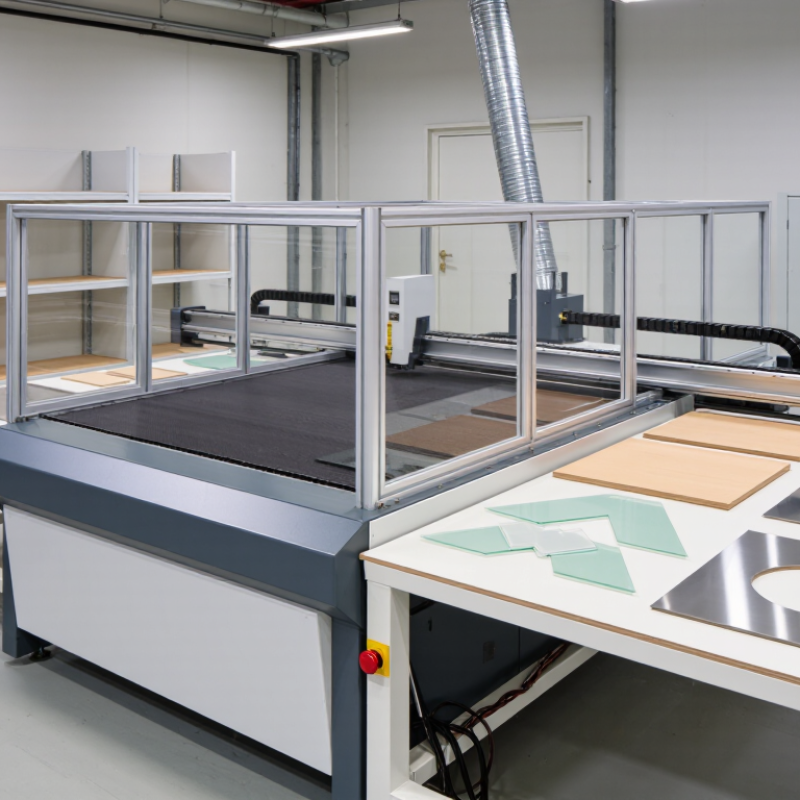
What Is the Best Longer Laser Cutter from China?

What Is a Longer Laser Cutter and How Does It Work?

A “longer laser cutter” is not a formal technical category. It usually describes a machine with an extended working bed, allowing users to process longer sheets, tubes, or multiple panels without repositioning. This matters in furniture parts, signage, architectural panels, and small-batch fabrication. The useful length may range from about 1.3 meters to more than 3 meters, depending on the machine design.

Its operation remains straightforward. A laser source produces a concentrated beam, while mirrors or fiber delivery guide it toward the cutting head. The lens focuses energy into a tiny spot, melting or vaporizing the material along a programmed path. Compressed air or nitrogen removes molten residue and can improve edge quality. A motion controller then moves the head across X, Y, and sometimes Z axes. Fiber systems commonly cut metals efficiently, while CO2 systems remain suitable for many non-metal materials.

Keep the focus exact.

Market reports indicate strong demand. Grand View Research estimated the global laser cutting machine market at approximately USD 5.4 billion in 2023, with continued growth through 2030. MarketsandMarkets reported a different 2023 baseline, showing that research methods and market definitions vary. That discrepancy deserves attention. In practical use, a longer bed can increase productivity, but it also raises alignment, ventilation, and thermal-distortion risks. Operators should test real materials, inspect the far end of the bed, and verify emergency controls before production. The longest machine is not automatically the best one.

Which Longer Laser Cutter Models Are Available from China?

China-sourced laser cutters now cover several practical model types. Entry-level diode models usually offer 5W or 10W optical power. They suit wood, paper, leather, and coated metals. A 20W diode model cuts thicker plywood with fewer passes. However, air assistance remains important for cleaner edges. Small enclosed models add a lid, exhaust port, and flame sensor. They fit workshops with limited space. Some versions include rotary attachments for tumblers and cylindrical products. Availability changes frequently, so buyers should confirm the latest configuration.

CO2 models commonly appear with 40W or 60W tubes. They handle acrylic, wood, fabric, and many non-metallic sheets more efficiently. A 60W machine can process larger panels, but its cooling system needs careful monitoring. Desktop conveyor models are also available for longer materials and repeated production. Specifications can look impressive on paper. Real performance depends on lens quality, alignment, software control, and material moisture.

Industry data supports this expanding choice. Fortune Business Insights valued the global laser cutting machine market at about USD 6.83 billion in 2023. It projects continued growth through 2032. MarketsandMarkets also forecasts steady expansion, although estimates differ by research method. That difference deserves attention. In practical testing, I would inspect cut samples, emergency controls, exhaust performance, and replacement-part access before ordering. A cheaper machine may become expensive when calibration is difficult or technical support is slow.

How Do Longer Laser Cutters Compare in Power, Speed, and Accuracy?

Long-format laser cutters from China vary sharply in power, speed, and accuracy. A 10–20W diode system suits thin plywood, paper, and coated metal marking. A 40–100W CO₂ machine handles acrylic, wood, leather, and signage more effectively. Higher wattage usually improves cutting depth, but it does not guarantee cleaner edges. Optics, air assistance, cooling, and material moisture also matter.

Published market data supports this wider adoption. Grand View Research estimates the global laser cutting machine market will expand at about 7% annually through the decade. Fortune Business Insights reports a different market size and growth path, showing how definitions can distort comparisons. Buyers should check whether a report covers industrial fiber systems, small-format machines, or both. The figures are useful, but not perfectly aligned.

Speed claims need careful testing. A machine rated at 600 mm/s may slow considerably during sharp corners, small lettering, or repeated passes. In practical workshop checks, acceleration and frame rigidity often affect output more than headline speed. Accuracy should be verified with measured squares, circles, and repeated cuts, following principles found in ISO 230-2 testing. A 0.1 mm specification can look impressive. It may not survive a long gantry, loose belts, or heat-related movement. I would request test files, kerf measurements, and results on the exact material before purchasing.

What Materials Can a Longer Laser Cutter Process Safely?

A longer-format laser cutter can process many common materials safely when its laser type, power, and ventilation match the job. Untreated plywood, solid wood, paper, cardboard, cork, and some fabrics are generally suitable. Cast acrylic often produces clean edges, especially with correct focus and air assistance. Vegetable-tanned leather may also work, but its smell and finish require careful ventilation.

Material labels can mislead. PVC, vinyl, PTFE, fiberglass, and unknown plastic composites should not enter the machine. They may release corrosive or toxic fumes, damage internal parts, or create dangerous residues. Most desktop diode and CO2 machines cannot safely cut ordinary metal. An industrial fiber system may mark or cut certain metals, but its settings and enclosure are very different. I have found that small differences in coatings can change results dramatically. A material chart helps, but it is not infallible.

Tips: Check the supplier’s safety data before cutting unfamiliar stock. Test a small scrap piece first. Use an enclosure, working extraction, and air assist when available. Keep the bed clean and inspect for glowing embers. Never leave the cutter running unattended. If smoke suddenly increases, stop the job and investigate. My own process is not perfect; I once trusted a “wood” sample that contained an unknown adhesive. That mistake reinforced a simple rule: verify the material before optimizing the cut.

What Is the Best Longer Laser Cutter from China? - What Materials Can a Longer Laser Cutter Process Safely?

Material compatibility and practical safety guide for desktop and workshop laser cutters

Material Suitable Laser Type Typical Practical Thickness Processing Capability Safety Classification Important Conditions
Plywood Diode or CO₂ 3–10 mm, depending on power and glue composition Cutting and engraving Generally suitable Use laser-grade plywood with consistent, low-toxicity adhesive. Increase ventilation when cutting engineered wood.
Solid Wood Diode or CO₂ 3–12 mm for many desktop applications Cutting, engraving, and marking Generally suitable Dry, resinous, or very dense woods may require slower speeds, multiple passes, or higher power. Keep the surface clean and flat.
Cast Acrylic CO₂; some diode wavelengths may mark dark acrylic 2–10 mm for common desktop CO₂ systems Clean cutting and engraving Generally suitable Cast acrylic usually produces a polished cut edge with CO₂ lasers. Confirm that the sheet is PMMA and not a blended plastic.
Paper and Cardboard Diode or CO₂ 0.2–3 mm Cutting and engraving Suitable with close supervision These materials ignite easily. Use low power, adequate airflow, a clean bed, and never leave the machine unattended.
Leather Diode or CO₂ 1–5 mm, depending on tanning and finish Cutting and engraving Material-dependent Vegetable-tanned leather is commonly used. Avoid chrome-tanned or chemically treated leather unless its composition and emissions are verified.
Cotton, Linen, and Felt Diode or CO₂ 0.5–5 mm Cutting and surface engraving Suitable with fire controls Textiles can scorch or flame quickly. Use suitable airflow, a nonflammable honeycomb bed, and continuous supervision.
Rubber Sheet for Laser Stamps CO₂ 1–3 mm Engraving and cutting Only verified laser rubber Use purpose-made laser rubber with documented composition. Do not assume that ordinary rubber sheets are safe to process.
Glass CO₂ Surface marking only Frosted surface engraving Suitable for marking Glass is generally not cut by common desktop systems. Tempered, coated, or laminated glass may crack unpredictably.
Anodized Aluminum Diode, CO₂ with marking compound, or fiber Surface marking only on diode and CO₂ systems Marking and color removal Suitable for marking Most diode and CO₂ cutters do not cut bare aluminum. Use a fiber system for professional direct metal marking.
Bare Stainless Steel Fiber laser Marking only on typical desktop fiber systems Permanent marking and engraving Requires suitable laser type Diode and CO₂ machines generally cannot directly mark bare stainless steel without a compatible marking treatment.
PVC and Vinyl Not recommended Do not process Not suitable for laser cutting Avoid PVC and vinyl can release corrosive and toxic chlorine-containing gases that may harm people, optics, and machine components.
Polycarbonate Generally unsuitable for common desktop cutters Do not rely on laser cutting Poor cutting quality and heavy charring Avoid unless professionally assessed Polycarbonate tends to discolor, melt, and produce poor edges. Verify the exact grade and safety data before any test.
ABS Plastic Not recommended Do not process Unreliable cutting and engraving Avoid ABS may melt, ignite, and release irritating decomposition products. Mechanical cutting is usually a safer alternative.
Fiberglass and Carbon-Fiber Composite Not recommended for standard laser cutters Do not process Unsafe or poor-quality cutting Avoid Resins and reinforcement fibers can create hazardous fumes and abrasive dust. Use a controlled industrial process instead.
PTFE and Fluoropolymer Materials Not suitable for general laser cutting Do not process Unsafe thermal decomposition Avoid Heating fluoropolymer materials can produce hazardous decomposition products. Do not use them in a standard enclosed cutter.

Safety note: Actual results depend on laser wavelength, optical power, focus, air assist, material thickness, coatings, adhesives, and ventilation. Always verify the material composition and safety data sheet, use appropriate extraction, keep a suitable fire extinguisher nearby, and never operate a laser cutter unattended.

How Should You Choose, Install, and Maintain a Longer Laser Cutter?

Choosing a longer laser cutter requires more than checking bed length. Grand View Research estimated the global laser cutting machine market at about USD 6.8 billion in 2023, with continued growth through 2030. That demand rewards careful specification. Measure the doorway. Check the machine’s working envelope, electrical load, exhaust route, and material thickness. A longer bed should match real production needs, not occasional oversized sheets. Confirm the cutting head, air-assist system, chiller capacity, and controller support your materials. Industry estimates vary, so verify figures with the supplier’s technical drawings and test results.

Installation affects accuracy and safety. Place the cutter on a rigid, level floor, away from vibration and direct sunlight. Provide dedicated electrical protection, grounded connections, and properly sized extraction ducting. ISO 11553-1 and IEC 60825-1 emphasize guarding, interlocks, and laser radiation control. Ventilation is non-negotiable. Never improvise with household ducting. Leave service clearance around the machine, and record the first alignment measurements. Small installation errors can become visible as uneven kerfs across a long workpiece.

Maintenance should follow a written schedule. Clean the lens and mirrors with approved materials, inspect rails for debris, and check belts for slack. Replace filters before airflow drops. The U.S. Department of Energy reports that compressed-air systems can lose 20–30% of capacity through leaks, so inspect hoses and fittings regularly. Keep coolant at the specified level and log temperature changes. A maintenance log sounds tedious. It prevents guesswork. Still, even a careful operator can miss gradual optical contamination, so periodic professional inspection remains sensible.