How to Achieve Effective Control Automation for Your Business?
In today's fast-paced business environment, effective control automation has become essential. According to a 2022 report by McKinsey, companies that implement advanced automation technologies can achieve productivity gains of up to 30%. This highlights the importance of integrating control automation into business processes.
Many organizations still struggle with their automation strategies. A survey by Deloitte found that nearly 50% of businesses do not have a cohesive automation plan. This lack of strategic focus can lead to wasted resources and unfulfilled potential.
Control automation, while promising, can also expose weaknesses in existing workflows. Businesses often need to reassess their operations to fully benefit from automation. The journey could reveal inefficiencies that need addressing before full implementation. This process can be challenging, yet it is crucial for sustained growth and competitive edge.
Understanding Control Automation and Its Importance in Business
Control automation is a pivotal element in modern business. It streamlines operations, enhances efficiency, and reduces human error. According to a McKinsey report, businesses that leverage automation can reduce operational costs by 20-30%. This significant reduction opens up resources for innovation and strategic initiatives.
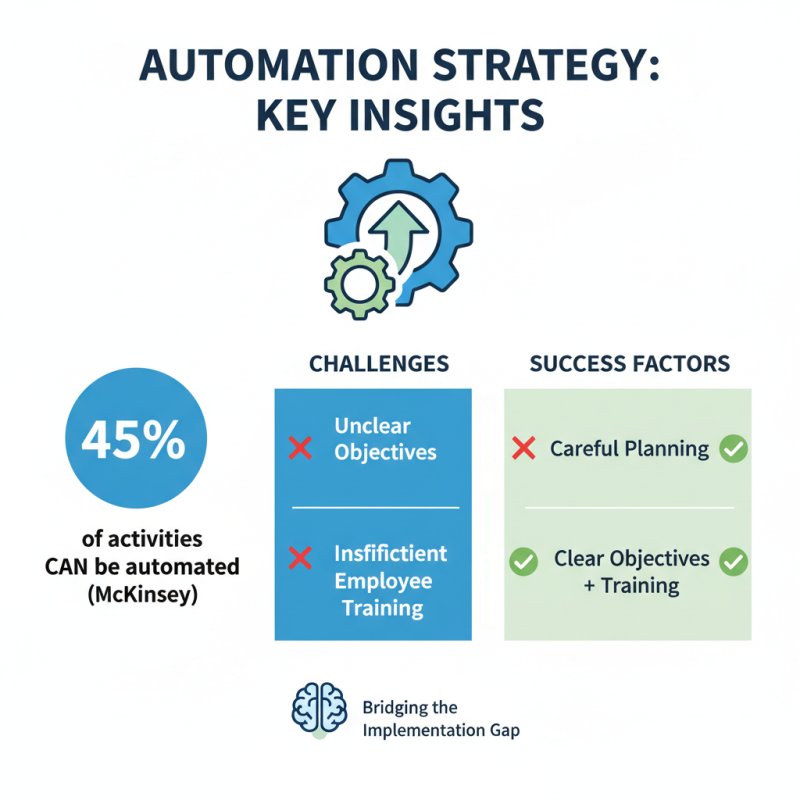
However, achieving effective control automation is not without challenges. Many companies struggle with integrating automation into existing workflows. A recent survey highlighted that about 45% of organizations find the transition to automation disruptive. This can lead to employee resistance and a temporary drop in productivity. It’s crucial to address these concerns proactively.
Understanding the importance of control automation means embracing its complexities. While automation can drive efficiency, continuous improvement is necessary. Periodic reviews and adjustments are vital. Organizations should invest time in training employees on new systems. A well-instructed workforce is essential for a successful implementation. Additionally, metrics should be established to evaluate the impact of automation initiatives. Failure to measure success can lead to missed opportunities for optimization.
Identifying Key Processes for Automation Within Your Operations
Identifying key processes for automation within your operations can significantly enhance efficiency. Start by mapping out your daily workflows. Look at repetitive tasks that consume time and resources. Common examples include data entry, inventory management, and customer follow-ups. By pinpointing these areas, you can make informed decisions about what to automate.
Consider the specific functions of your team. Do they spend too much time on manual reporting? Could automated notifications improve response times? It’s crucial to involve your staff in this process. Their insights can help identify pain points that might not be visible at first glance. Be cautious, though; not all processes are suitable for automation. Some require a human touch, and removing that can lead to dissatisfaction.
Once you’ve identified potential automation targets, prioritize them based on impact and feasibility. It’s not just about what could save time; consider what might improve customer experience or reduce errors. Automation is a powerful tool, but it’s essential to reflect on whether it genuinely addresses your business needs. Take the time to assess the cost vs. benefit before diving in.
Automation Impact on Key Business Processes
Selecting Appropriate Technologies and Tools for Automation Implementation
Choosing the right technologies and tools for automation is crucial for business success. According to a report by McKinsey, 45% of work activities can be automated using existing technologies. However, many companies struggle to identify suitable solutions that match their specific needs. Often, businesses invest in automated tools without understanding their core processes. This can lead to wasted resources and unmet expectations.
It’s essential to focus on user-friendly technologies. Automation tools should integrate seamlessly with existing systems. A survey by Deloitte found that 86% of organizations that implemented automation reported significant productivity gains. But these results are not guaranteed. An incompatible tool can hinder progress rather than enhance it. Companies should also consider scalability when selecting automation solutions. Can the tool adapt as business needs change?
Finally, evaluate potential vendors thoroughly. Many organizations overlook the importance of support and training. A Gartner report highlighted that 70% of automation projects fail due to poor implementation. This statistic reveals a critical flaw in how some companies approach automation. Investing in the right tools is vital, but so is having a clear roadmap for implementation and ongoing support.
Measuring Success: Key Performance Indicators for Automation Outcomes
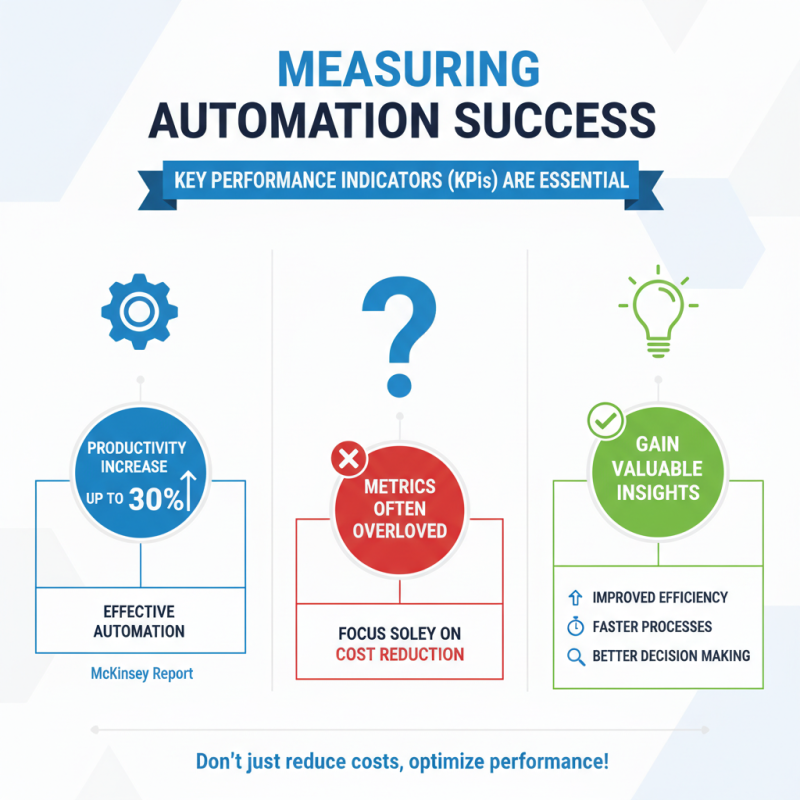
To measure the success of automation, key performance indicators (KPIs) are essential. According to a report by McKinsey, businesses that implement automation effectively can increase productivity by up to 30%. However, many companies overlook the importance of tracking these metrics. Companies often focus solely on cost reduction, missing other valuable insights.
One crucial KPI is return on investment (ROI). A study from Deloitte highlights that organizations with automated processes see an average ROI of 20% within the first year. Yet, some firms may struggle to calculate this due to inadequate data collection methods. Tracking time saved on repetitive tasks can provide additional perspective, revealing how automation frees up employee hours for strategic initiatives.
Customer satisfaction is another vital metric. Research indicates that businesses utilizing automated systems can improve customer service ratings by nearly 25%. However, if automation leads to impersonal interactions, client relationships may suffer. Continuous assessment of both quantitative and qualitative outcomes will help businesses refine their automation strategy. Reflecting on these KPIs will ensure automation efforts align with overall business goals.