Why is Manufacturing Automation Essential for Global Supply Chains?
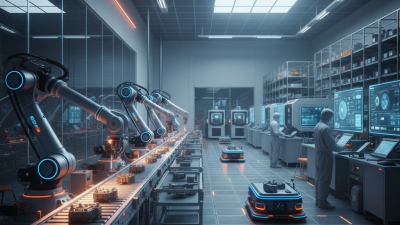
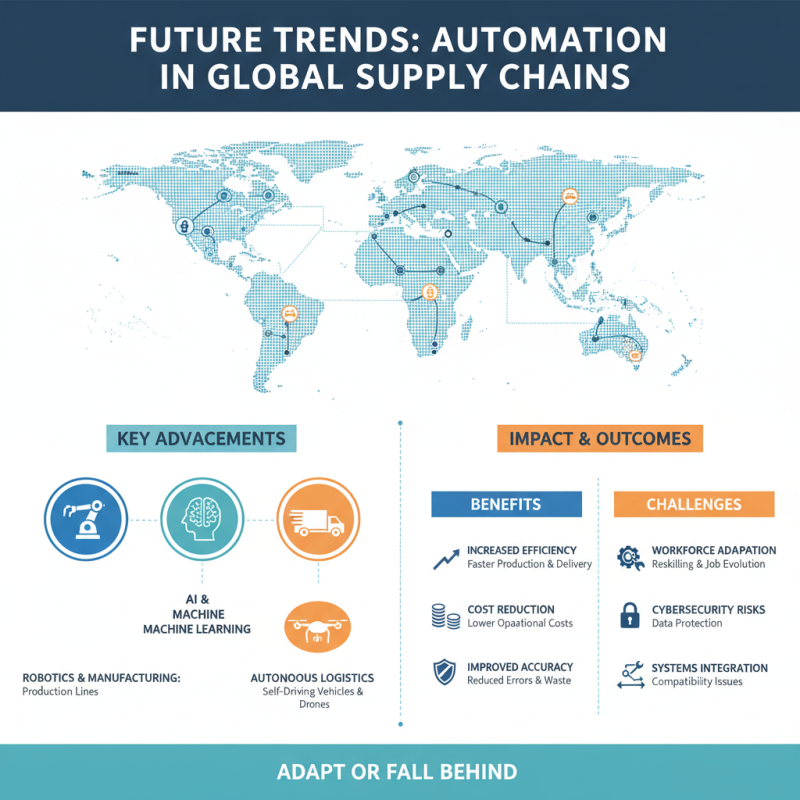
In today's global marketplace, manufacturing automation has become a vital component of supply chains. This transformative technology enhances efficiency and reduces costs. As companies face increasing competition, they must adapt to remain relevant.
Manufacturing automation allows for precise production processes, ensuring high-quality outputs. It minimizes human error, which can lead to product defects and delays. However, automation is not without its challenges. Initial investments can be substantial, creating barriers for small businesses.
Furthermore, reliance on technology raises concerns about job displacement. The balance between automation and workforce needs requires careful consideration. Nevertheless, the benefits of manufacturing automation, including improved productivity and scalability, often outweigh these drawbacks. Embracing this shift is essential for companies aiming to thrive in a dynamic environment.
The Role of Manufacturing Automation in Enhancing Supply Chain Efficiency
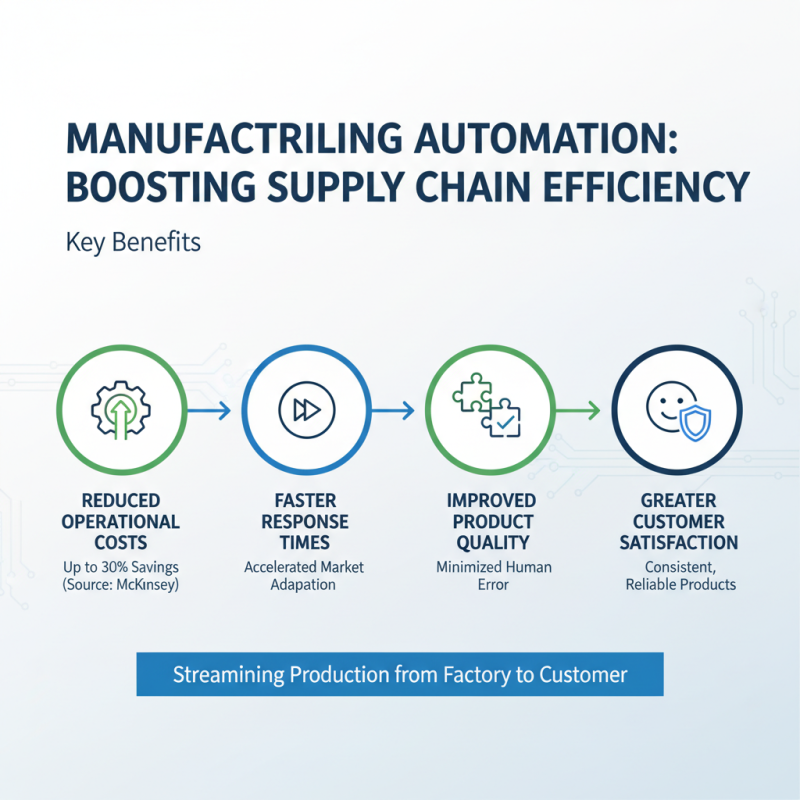
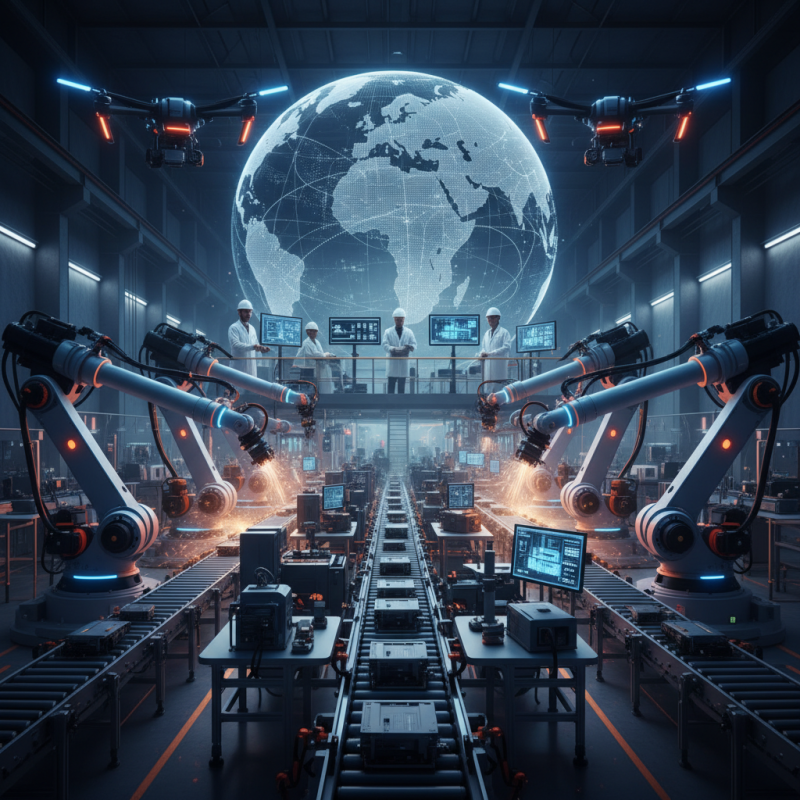
Manufacturing automation significantly enhances supply chain efficiency by integrating advanced technologies into production processes. A report by McKinsey highlights that companies implementing automation can reduce operational costs by up to 30%. This change not only streamlines production but also accelerates response times to market demands. Automation minimizes human error, ensuring consistent product quality which is crucial for maintaining customer satisfaction.
Tips: Automate repetitive tasks first. Start small and scale gradually.
Moreover, a study from Deloitte reveals that automation in manufacturing can lead to a 20% increase in productivity. With data analytics, businesses can forecast demand more accurately. This predictive capability enables better inventory management, ultimately reducing waste and excess stock. However, the transition requires careful planning. Companies must consider workforce impacts and invest in reskilling employees.
Tips: Engage your team early in the process. Strong communication is key.
It is essential to recognize that automation is not a one-size-fits-all solution. Each business will find unique challenges. Understanding these intricacies can guide companies in making informed decisions. The journey towards automation should be approached with both enthusiasm and caution, ensuring that all factors are considered for optimal results.
Impact of Automation on Cost Reduction in Global Manufacturing Operations
Manufacturing automation plays a pivotal role in reducing costs within global supply chains. By integrating advanced technologies, manufacturers can substantially lower operational expenses. Automated systems are designed to enhance productivity while minimizing the need for manual labor. This shift not only cuts labor costs but also reduces human errors, resulting in fewer production delays.
Investments in automation technology often yield significant returns. One study shows a potential cost reduction of up to 30%. Yet, the transition to automation can be challenging. Companies may face initial high costs and require a skilled workforce to manage these technologies. Furthermore, older machinery may become obsolete, necessitating further investment.
Despite these hurdles, the benefits can outweigh the challenges. Automating processes leads to streamlined operations and faster turnaround times. These factors can improve competitiveness in the global market. Still, companies must carefully assess their automation strategies. Relying solely on automation may overlook the importance of human insight in complex decision-making.
Why is Manufacturing Automation Essential for Global Supply Chains? - Impact of Automation on Cost Reduction in Global Manufacturing Operations
| Aspect |
Before Automation |
After Automation |
Cost Reduction (%) |
| Labor Costs |
$500,000 |
$350,000 |
30% |
| Production Time |
1000 hours |
700 hours |
30% |
| Material Waste |
20% |
10% |
50% |
| Maintenance Costs |
$100,000 |
$70,000 |
30% |
| Quality Issues |
15% |
5% |
66.67% |
Technological Advancements Driving Automation in Supply Chains
Manufacturing automation is increasingly vital in global supply chains. Technological advancements play a significant role in this evolution. Robotics, artificial intelligence, and the Internet of Things are at the forefront. These technologies streamline processes, enhance production efficiency, and reduce human error. Companies can now operate 24/7, boosting output while minimizing downtime.
However, the integration of such technologies is not without challenges. Many organizations struggle with the cost of implementation. Additionally, there is a skills gap. Workers need training to use new systems effectively. This gap can create resistance to change within a workforce.
Furthermore, while automation offers efficiency, it can lead to job displacement. This raises questions about the future of employment in manufacturing. Balancing innovation with the human element is essential. Companies must consider the social impact of widespread automation. Adopting these technologies responsibly can pave the way for a more resilient supply chain.
Case Studies: Successful Automation Implementation in Leading Industries
In recent years, leading industries have harnessed automation to boost productivity and efficiency. A notable case is the automotive sector, where a McKinsey report indicated that automation could increase productivity by 20-30%. This shift is largely driven by advanced robotics and AI, allowing manufacturers to decrease downtime and enhance precision.
The electronics industry also showcases successful automation implementation. A study by Deloitte found that manufacturers who adopted automation reported a 25% reduction in production costs. Assembly lines that previously relied on manual labor now utilize collaborative robots that work alongside human workers. This combination improves safety and speeds up production cycles.
However, the transition to automation isn’t without challenges. Many companies face high initial investment costs and a skills gap in the workforce. Training employees to work alongside new technology is essential yet often overlooked. This oversight can lead to resistance from staff and hinder the overall effectiveness of automation efforts. Continuous evaluation and adaptation are crucial for long-term success in an automated environment.