
How Can We Help You?

China Top 10 Aramid Honeycomb Tools Manufacturers?

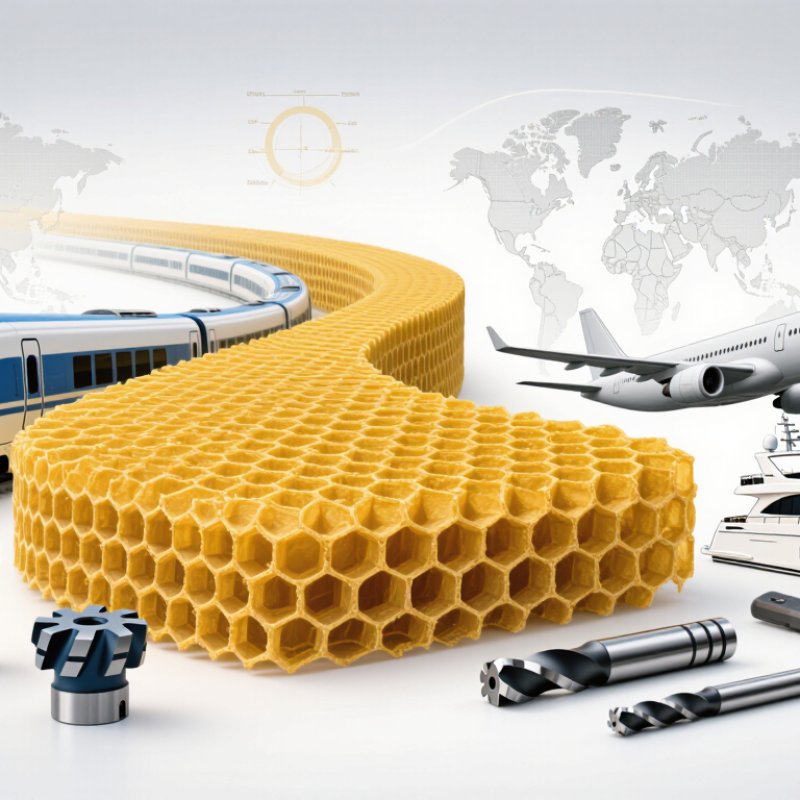
China’s aramid honeycomb sector is gaining attention as aerospace, rail, marine, and lightweight industrial applications expand. Aramid cores are valued for low density, fire resistance, and strong fatigue performance. However, these advantages depend heavily on accurate cutting, drilling, trimming, and forming. That is where reliable Aramid Honeycomb Tools become essential.

Industry reports show steady growth in advanced composite materials. MarketsandMarkets’ recent studies identify aerospace and defense as major drivers of the honeycomb core materials market. Grand View Research also reports rising demand for lightweight sandwich structures in transportation and energy applications. These reports do not always use identical market definitions. Their forecasts should therefore be compared carefully, not copied blindly. Still, the direction is clear.

This guide examines ten Chinese manufacturers connected with aramid honeycomb processing tools and related equipment. The assessment considers tool geometry, cutting stability, material compatibility, dimensional accuracy, service response, and documented customer experience. Practical details matter. A clean cell edge, reduced dust, and consistent tool life can influence an entire production shift. Certifications, inspection records, and application testing also deserve attention. Some suppliers publish limited technical information, which makes independent verification necessary. No ranking is flawless. Supplier capability can change with equipment upgrades, export experience, and engineering staff turnover. Buyers should request samples, tolerance data, and realistic trial results before making a final decision. This review offers a structured starting point, not a substitute for technical validation.
China Top 10 Aramid Honeycomb Tools Manufacturers?

What Are Aramid Honeycomb Tools and How Are They Used?

Aramid Honeycomb Tools: What They Are and How They Are Used

Aramid honeycomb tools are cutting, drilling, trimming, and forming tools designed for aramid honeycomb core. This core contains thin, resin-treated aramid paper cells. It is light, stiff, and common in aircraft interiors, marine panels, rail vehicles, and advanced composite structures. Cells crush easily. Therefore, ordinary workshop methods can damage the core.

In practical fabrication, operators often use sharp carbide cutters, fine-tooth saws, rotary tools, and low-pressure clamping fixtures. A vacuum table can hold the panel without squeezing its cells. Dust extraction is important because dry aramid particles can spread across the work area. Tool settings depend on cell size, density, resin content, and panel thickness. A slow feed may create heat, while excessive speed can tear the cell walls. Clean cuts matter.

Drilling requires a stable backing surface and controlled pressure. Small pilot holes can reduce wandering and edge breakout. During bonding, spreading adhesive evenly helps prevent weak zones. Technicians should inspect the panel under angled light. Gaps, crushed cells, and uneven edges may be easy to miss. A trial cut on scrap material is wise, although it does not perfectly predict production results. That limitation deserves attention. Regular tool inspection, measurement records, and operator training improve repeatability when comparing qualified manufacturers in China.

Key Materials and Manufacturing Processes for Aramid Honeycomb Tools

China Top 10 Aramid Honeycomb Tools Manufacturers?

Aramid honeycomb tools depend on material discipline, not factory size alone. The core usually combines para-aramid paper with a phenolic resin system. Aramid fibers provide high strength, low density, and strong heat resistance. The paper is calendared, resin-impregnated, dried, and bonded into blocks. Cells are then expanded, formed, and cured under controlled pressure.

Cell geometry matters greatly. Small cells improve surface stability, while larger cells reduce weight and resin use. According to the MarketsandMarkets 2024 Aramid Fiber Market report, the sector may grow from about USD 4.3 billion in 2024 to USD 5.8 billion by 2029. That growth increases pressure on Chinese manufacturers to control fiber alignment and resin distribution. Small defects matter.

Very small defects can distort tool surfaces.

The Fortune Business Insights 2024 Honeycomb Core Market report values the global market at approximately USD 2.16 billion in 2023. It also identifies aerospace and lightweight structures as important demand areas. For tool production, manufacturers should verify density, cell size, flatness, compression strength, and moisture resistance. CNC trimming and surface sealing follow curing, but dimensional checks must continue afterward. In practice, resin content is often the difficult variable. Too much resin adds weight; too little weakens the cell walls. Some supplier comparisons also overlook repairability, thermal cycling, and actual workshop handling. A top-ten list should therefore consider test evidence, process consistency, and documented experience rather than catalogue claims.

How to Evaluate Chinese Aramid Honeycomb Tool Manufacturers

Evaluating Chinese Aramid Honeycomb Tool Manufacturers

China’s aramid honeycomb tooling sector serves aerospace, rail, marine, and advanced composite production. MarketsandMarkets’ 2024 aerospace composites report expects the sector to grow at roughly 8% annually through 2029. That growth increases supplier choices, but it also increases evaluation risks. A low quotation means little without stable cell geometry, moisture control, and traceable production records.

Ask each manufacturer for recent test reports covering core density, cell size, foil thickness, flatwise tensile strength, and shear strength. Compare results with your drawing requirements and applicable ASTM or ISO methods. Request three production samples, not one carefully selected piece. Measure flatness across the panel. Check crushed edges, adhesive contamination, and uneven perforations under magnification. Small defects become visible during vacuum bagging.

Experience matters during a process audit. Inspect resin storage, oven calibration, CNC trimming, and final packing. Confirm lot identification on every panel. Quality systems such as ISO 9001 are useful, yet certification alone proves little. Aerospace projects may also require AS9100-based controls and customer-specific documentation. The supplier should explain corrective actions, not merely display certificates. I would also test a sample after humidity exposure. This step is often missed. A polished sample can still mislead. Delivery history, technical response time, and packaging quality deserve equal attention. In practice, the best supplier may not offer the lowest price. Insufficient technical evidence should remain a clear warning.

China’s Top 10 Aramid Honeycomb Tools Manufacturers

China’s Top 10 Aramid Honeycomb Tools Manufacturers

China’s aramid honeycomb tooling sector serves aerospace, rail, marine, and lightweight composite production. The strongest manufacturers usually provide carbide cutters, compression routers, drilling tools, and dust-control systems. Their value depends on clean cell cutting, stable runout, and predictable tool life. Small defects matter.

MarketsandMarkets reported that the global aramid fiber market could grow from about USD 4.1 billion in 2023 to USD 5.6 billion by 2028. This expansion supports demand for specialized machining tools.

Grand View Research also projects steady growth in the honeycomb core market through 2030. These figures suggest stronger procurement activity in China, especially for automated composite lines.

A practical top-ten assessment should examine ISO-certified production, coating performance, cutting tests, delivery records, and technical support. Manufacturers with documented trials are more credible than suppliers using only catalog claims. Test panels should measure burr height, crushed cells, surface waviness, and extraction efficiency. Very few public rankings disclose comparable data. That is a weakness.

In real workshops, tool selection is rarely simple. A cutter that performs well on thin aramid panels may struggle with thick cores or adhesive-rich skins. Operators should request sample machining and inspect results under magnification. Prices can also mislead. Lower purchase costs may create more frequent replacements and downtime. Any ranking should therefore remain transparent, evidence-based, and open to revision as production records change.

Applications, Quality Standards, and Buyer Considerations

China Top 10 Aramid Honeycomb Tools Manufacturers: Applications, Quality Standards, and Buyer Considerations

Aramid honeycomb tools support composite molding, aerospace interiors, automotive panels, marine structures, and wind-energy components. Their low density helps reduce handling effort. Their cell structure also supports stable pressure distribution during curing. In practical workshops, tool life depends on resin compatibility, temperature cycles, machining accuracy, and storage conditions. A supplier ranking should examine more than production capacity. It should review engineering records, inspection methods, and after-sales responsiveness.

Quality standards deserve close attention. Ask for material certificates, cell-size tolerance, density data, resin system compatibility, and service-temperature limits. ISO 9001 can indicate controlled processes, but it does not guarantee every tool performs well. Request sample reports, dimensional inspection records, and traceability for core materials. For high-temperature applications, verify thermal expansion behavior and repeated-cycle testing. Some buyers overlook edge sealing. That mistake can cause resin ingress and weak tool surfaces.

Tips: Compare at least three quotations using identical drawings and tolerances. Confirm whether machining, bonding, sealing, and final inspection are included. Ask for a trial panel before approving large orders. Check packaging against moisture and impact risks. I would also discuss repair options early; this step is often forgotten. A cheaper tool may become expensive after one failed cure. Still, no checklist replaces a practical test under your actual temperature, pressure, and resin conditions.

China Top 10 Aramid Honeycomb Tools Manufacturers? - Applications, Quality Standards, and Buyer Considerations

Anonymized capability comparison based on commonly published industry specifications and buyer evaluation criteria. The profiles are indicative and are not a verified ranking of named companies.

Profile Typical Manufacturing Focus Common Cell Size Indicative Density Range Typical Core Thickness Main Applications Relevant Quality References Buyer Verification Points
Capability Profile 01 Aerospace-grade aramid paper honeycomb with precision expansion and controlled cell geometry 3.2–6.4 mm 48–96 kg/m³ 6–50 mm Aircraft interior panels, radomes, fairings, lightweight structural panels AS9100D or ISO 9001; ASTM C365/C365M; ASTM C273/C273M; ASTM C393/C393M Lot traceability, cell-size tolerance, resin content, flatwise compression, shear strength, flame and smoke data
Capability Profile 02 High-strength core panels designed for composite sandwich construction 3.2–9.5 mm 64–144 kg/m³ 10–100 mm UAV structures, marine decks, rail interiors, vehicle body panels ISO 9001; ASTM C365/C365M; ASTM C273/C273M; ASTM D7249/D7249M Core density uniformity, crush resistance, moisture conditioning, panel flatness, adhesive compatibility
Capability Profile 03 Lightweight over-expanded honeycomb for large-area panel fabrication 6.4–19 mm 29–64 kg/m³ 12–150 mm Large aircraft interior panels, wind-turbine components, architectural cladding ISO 9001; ASTM C365/C365M; ASTM C393/C393M; customer-specific fire standards Expansion ratio, unsupported cell stability, edge closeout, dimensional recovery, storage humidity
Capability Profile 04 Fire-performance-oriented aramid honeycomb for transport interiors 3.2–12.7 mm 48–128 kg/m³ 6–80 mm Aircraft cabin monuments, train partitions, bus interiors, public-transit panels ISO 9001 or AS9100D; applicable FAR/CS-25 or EN 45545-2 test programs; ASTM mechanical tests Flammability reports, smoke density, toxic gas data, resin formulation, production-lot certification
Capability Profile 05 CNC-cut and contour-machined honeycomb blocks and pre-formed cores 3.2–9.5 mm 48–96 kg/m³ 10–120 mm Curved nacelles, aircraft fairings, automotive bodywork, marine tooling ISO 9001; dimensional inspection plans; ASTM C273/C273M and C365/C365M where specified CAD data control, machining tolerance, cut-surface integrity, minimum web thickness, protective packaging
Capability Profile 06 High-temperature phenolic or heat-resistant resin-treated aramid core 3.2–6.4 mm 64–144 kg/m³ 6–50 mm Engine-adjacent panels, thermal barriers, high-temperature tooling, aerospace interiors ISO 9001; customer heat-aging procedures; ASTM C365/C365M; ASTM C273/C273M Thermal aging, resin cure, outgassing, moisture uptake, post-aging compression and shear retention
Capability Profile 07 Custom cell geometry and mixed-density core assemblies for optimized stiffness-to-weight ratio 3.2–19 mm 48–192 kg/m³ 10–100 mm Satellite panels, UAV skins, specialty transportation structures, lightweight tooling ISO 9001 or AS9100D; ASTM C393/C393M; ASTM C273/C273M; design qualification testing Engineering change control, coupon test correlation, density mapping, fatigue testing, minimum order quantity
Capability Profile 08 Export-oriented standard panels with cut-to-size and kitting services 3.2–12.7 mm 48–128 kg/m³ 6–80 mm General composite panels, marine interiors, commercial vehicles, industrial enclosures ISO 9001; ASTM test reports; packing and export inspection procedures Incoterms, export packaging, moisture barriers, certificate of conformity, sample approval, delivery reliability
Capability Profile 09 Small-batch prototyping and rapid tooling cores for development programs 3.2–9.5 mm 29–96 kg/m³ 3–60 mm Prototype aircraft parts, sports equipment, laboratory panels, composite development ISO 9001 where available; incoming material inspection; ASTM screening tests Sample lead time, drawing interpretation, material substitutions, test-coupon availability, repeatability between batches
Capability Profile 10 Integrated core-and-panel supplier offering bonding, facing, trimming, and final inspection 3.2–12.7 mm 48–144 kg/m³ 10–100 mm Finished sandwich panels, aircraft interiors, rail modules, industrial access panels ISO 9001 or AS9100D; ASTM C393/C393M; ASTM D7249/D7249M; adhesive-process controls Bondline thickness, peel strength, void content, cure records, panel warpage, final dimensional inspection
Buyer note: Aramid honeycomb performance depends on paper grade, resin system, cell size, density, ribbon direction, moisture conditioning, adhesive selection, and facing design. Request a current technical data sheet, certificate of conformity, batch test results, dimensional inspection report, and application-specific fire or environmental test evidence before approval.