How Can We Help You?

What Are the Top Box Design Ex Motors in 2026?

Choosing the right Box Design Ex Motors in 2026 requires more than comparing power ratings. These motors must perform reliably in demanding areas, including chemical plants, grain facilities, refineries, and dusty processing lines. A compact motor may drive a conveyor smoothly, yet fail to suit a high-temperature pump room. Details decide.

This guide examines leading models through certified specifications, practical installation needs, and documented field performance. It considers explosion-protection methods, temperature classes, ingress protection, efficiency ratings, braking options, and compatibility with variable-frequency drives. Enclosure materials also matter. Cast iron offers strength, while aluminum can reduce weight during maintenance. A sealed terminal box can prevent dust from reaching sensitive connections.

Certification remains essential. Buyers should verify current IECEx, ATEX, or applicable regional documentation through trusted manufacturers and authorized suppliers. Marketing language alone is not reliable evidence. Thermal behavior, bearing life, noise, vibration, and service access deserve equal attention. Performance still matters.

The “top” motor depends on the application, not popularity. A motor rated for a gas environment may not fit a combustible-dust zone. An efficient design may also require a more advanced control system. No motor is perfect. Even respected products can face limitations in extreme heat, frequent starts, or poorly aligned installations.

By comparing engineering data with real operating conditions, this overview aims to support safer and more informed decisions. Some rankings may change as manufacturers release newer designs, improve efficiency, or update certifications. Careful verification remains necessary before procurement, installation, and routine operation.

What Are the Top Box Design Ex Motors in 2026?

Defining Box-Design Motors and Their Role in 2026

What Are the Top Box Design Ex Motors in 2026?

Defining Box-Design Motors and Their Role in 2026

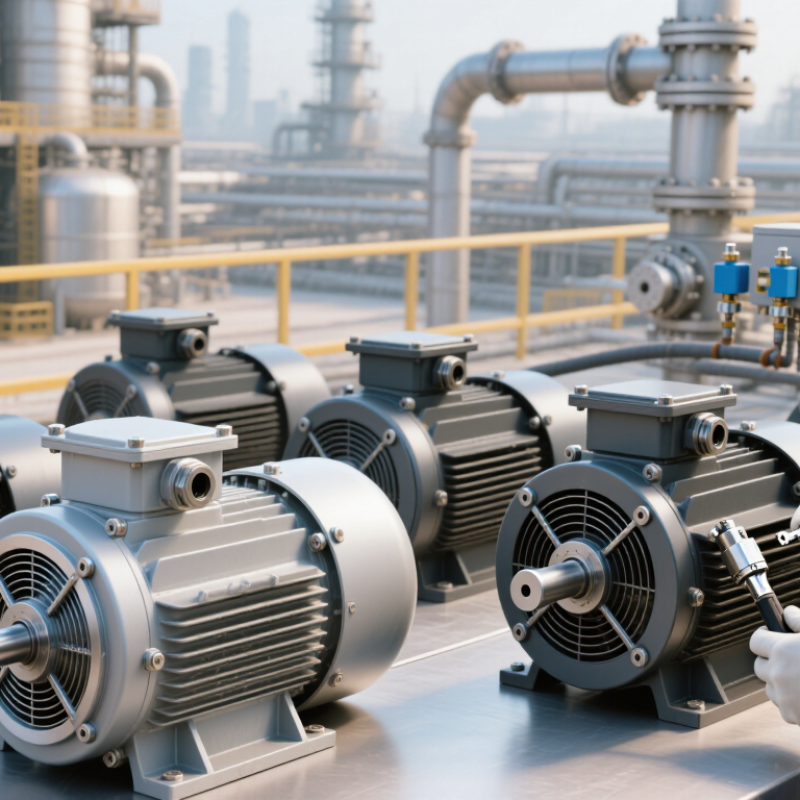
Box-design Ex motors are enclosed electric motors built for hazardous industrial areas. Their rigid housings help limit sparks, flames, and hot surfaces from reaching surrounding gases or dust. However, “box-design motor” is not a fully standardized technical category. Buyers should verify the protection method under the IEC 60079 series, not trust the enclosure’s appearance.

Their role is becoming more important as factories add pumps, fans, compressors, and automated conveyors. The International Energy Agency’s Energy Efficiency 2024 report identifies industry as responsible for roughly 37% of global final energy demand. Efficient motor selection can therefore affect both safety and operating cost. Yet efficiency alone is not enough. A motor may meet an energy target while failing the required temperature class, ingress protection, or hazardous-area certification. This is where many specifications become too optimistic.

Tips: Match the motor’s Ex marking with the actual gas or dust zone. Check ambient temperature, starting load, cable entries, maintenance access, and certification records. Ask for measured efficiency at the real duty point. A small mismatch can create heat, downtime, or unsafe operation. In 2026, digital monitoring will also matter, but sensors must not compromise the enclosure or certification. The careful choice is sometimes less impressive on paper. It may still be the safer engineering decision.

Key Performance Factors for Comparing Box-Design Motors

What Are the Top Box Design Ex Motors in 2026?

Key Performance Factors for Comparing Box-Design Motors

Comparing box-design motors requires more than checking rated power. Torque under load matters because real equipment rarely runs without resistance. Measure starting torque, continuous torque, and short overload capacity separately. A motor that accelerates a loaded mechanism smoothly is often more useful than one with a higher peak number.

Heat tells the truth. During testing, record winding temperature, housing temperature, and cooling recovery time. Poor thermal control can shorten insulation life, even when efficiency looks acceptable. Check efficiency across several speeds, not only at the rated point. Variable-speed operation may reveal losses hidden by a single laboratory figure.

Noise matters too. Listen for gear mesh, bearing vibration, and changes during acceleration. Review ingress protection, shaft alignment, mounting strength, and connector sealing for the intended environment. Control response is another practical factor, especially where position accuracy or fast stopping is required. Ask for test conditions, duty-cycle definitions, and tolerances. A neat datasheet can still mislead. In my experience, service access is often underestimated; a compact housing may save space but make inspection difficult. I would also compare replacement parts and diagnostic tools before choosing. Some performance judgments remain uncertain until the motor faces dust, heat, repeated starts, and uneven loading. That is where impressive specifications can lose meaning.

Leading Box-Design Motor Types Available in 2026

What Are the Top Box Design Ex Motors in 2026?

In 2026, box-design Ex motors support pumps, fans, compressors, and conveyors in hazardous facilities. Their squared housings simplify terminal access and heat management. The real choice depends on the hazard, not appearance. IECEx certification, temperature class, enclosure rating, and zone compatibility require careful checking.

The leading types include flameproof Ex d, increased-safety Ex e, dust-protected Ex t, and pressurized Ex p motors.

Ex d designs contain internal ignition, while Ex e models reduce sparks and excessive heating. Ex t motors protect against combustible dust layers. Ex p systems use clean air or inert gas pressure.

It matters. The IEA’s Energy Efficiency 2024 report states that motor systems consume more than 40% of global electricity. The U.S. Department of Energy’s Motor Systems Market Assessment also identifies motor-driven equipment as a major industrial electricity load.

For practical selection

For practical selection, engineers should inspect cable glands, terminal-box clearances, bearing temperatures, cooling paths, and maintenance access.

A high-efficiency motor may lower operating costs, but poor alignment can erase those gains. Field experience shows that dust buildup often receives less attention than rated power.

That is a weakness. Efficiency classes, thermal sensors, variable-speed compatibility, and documented inspection intervals should be reviewed together.

Some catalog descriptions remain vague about real site conditions. Engineers should challenge them.

How Efficiency, Cooling, and Durability Differ Across Models

Choosing a top box design Ex motor in 2026 means comparing more than nameplate efficiency. The U.S. Department of Energy’s 2021 Motor Systems Market Assessment reports that motor-driven equipment uses about 70% of industrial electricity. Small efficiency gaps therefore become expensive across continuous-duty sites. Models meeting IE3 efficiency are a practical baseline, while IE4 designs can reduce losses further under steady loads. However, measured performance depends on voltage quality, duty cycle, and correct sizing.

Cooling separates similar-looking motors. Most enclosed Ex motors use finned frames and internal fans, commonly classified under IC411 cooling arrangements. Forced ventilation, such as IC416, can improve heat removal during low-speed operation, but it adds components and maintenance points. IEC 60034-30-1 provides efficiency classifications, while the IEC 60079 series addresses hazardous-area protection. A higher efficiency rating does not automatically mean better thermal performance. Check temperature rise at the actual load.

Durability depends on heat, vibration, sealing, and the protection method. Flameproof designs usually require robust housings and carefully controlled joints. Increased-safety designs may offer lower mechanical mass, but installation quality becomes critical. The International Energy Agency repeatedly identifies motor-system optimization as a major efficiency opportunity, not just a motor replacement exercise. In field inspections, blocked cooling fins and oversized motors are common, avoidable failures. I would still question laboratory claims without site data. Dust, washdown, frequent starts, and inverter operation can change the ranking completely. Bare catalog comparisons are imperfect.

What Are the Top Box Design Ex Motors in 2026?

How efficiency, cooling, and durability differ across common explosion-protection designs

Efficiency

Efficiency is driven mainly by motor size, load, rotor design, and IE classification rather than the Ex protection method itself. The ranges shown are typical rated-load bands for industrial low-voltage motors.

Cooling

IC411 self-cooled motors are widely used for general duty. IC416 forced ventilation can improve heat dissipation, especially at low speed or with variable-frequency drives, but adds auxiliary equipment.

Durability

Flameproof, increased-safety, non-sparking, and dust-protected designs address different hazards. IP55–IP66 enclosure levels improve resistance to dust and water, but do not by themselves specify service life.

Indicative engineering ranges based on common IEC 60034, IEC 60079, and IEC 60529 classifications. Actual performance depends on rated power, duty cycle, enclosure, ambient temperature, cooling method, and installation conditions.

Choosing the Right Box-Design Motor for Specific Applications

Choosing the right box-design Ex motor starts with the application, not the catalog rating. A conveyor, pump, and mixer impose different loads. Check required torque, starting current, speed, duty cycle, and ambient temperature. A motor running near its thermal limit may appear efficient, yet fail early under constant load. In practical maintenance work, mounting space also matters. Measure shaft height, terminal-box clearance, cable entry direction, and service access before ordering.

Hazardous areas demand careful certification checks. Confirm the motor’s protection concept, gas or dust classification, temperature class, enclosure rating, and permitted installation zone. Match the motor with the drive, overload protection, brake, and control method. For pumps, corrosion resistance and moisture protection deserve close attention. For conveyors, high starting torque and frequent starts may matter more than peak efficiency. Noise and vibration should not be ignored. Small alignment errors can become expensive problems. I have seen technically correct selections fail because the base was too flexible.

Tips: Compare the real load profile with the rated duty, not only the nameplate power. Ask for verified test data, certification documents, dimensional drawings, and maintenance guidance. Leave reasonable thermal and torque margin, but avoid excessive oversizing. It can reduce efficiency and complicate control. When conditions are uncertain, record temperature, current, vibration, and starting behavior during commissioning. Recheck the choice after several operating weeks. Reality often exposes assumptions.

What Are the Top Box Design Ex Motors in 2026? - Choosing the Right Box-Design Motor for Specific Applications
Motor Type Typical Hazardous Area Protection Concept Typical Power Range Typical Voltage and Frequency Efficiency Guidance Common Enclosure and Cooling Typical Temperature Class Best-Fit Applications Key Selection Considerations
Flameproof Box-Design Motor Gas Zones 1 and 2; Equipment Groups IIA, IIB, and selected IIC applications Ex db or Ex db eb, depending on the terminal-box and motor construction Approximately 0.12–315 kW for low- and medium-voltage industrial duties 230/400 V or 400/690 V at 50 Hz; 460 V at 60 Hz is also common IE3 is widely specified; IE4 may be selected where lifecycle energy savings justify the higher initial cost Cast or fabricated enclosure; normally TEFC with IC411 cooling T3 or T4 is common; T5 and T6 require lower permissible surface temperatures Verify gas group, maximum surface temperature, starting current, shaft load, cable-entry certification, and flame-path requirements
Increased-Safety Box-Design Motor Gas Zones 1 and 2 where ignition sources must be prevented during normal operation Ex eb; used for equipment designed to avoid arcs, sparks, and excessive temperatures Approximately 0.12–250 kW, subject to the certified design and starting method Typically 230/400 V or 400/690 V, 50 Hz; compatible with direct-on-line, star-delta, or soft-start systems when certified IE3 or IE4, depending on frame size, load profile, and applicable local requirements TEFC, IC411 cooling; robust terminal enclosure with certified increased clearances T3 or T4 in many process installations Confirm starting behavior and locked-rotor duration because increased-safety designs have strict thermal limits
Dust-Protected Box-Design Motor Dust Zones 21 and 22; combustible dust environments Ex tb or Ex tc with protection by enclosure Approximately 0.12–315 kW 230/400 V or 400/690 V at 50 Hz; 460 V at 60 Hz is available in many configurations IE3 is a practical baseline; IE4 is beneficial for high annual operating hours Dust-tight enclosure, typically IP65 or IP66; IC411 cooling is common Surface-temperature limit is selected according to the dust layer or dust cloud ignition risk Specify dust type, permitted surface temperature, dust-layer thickness assumptions, ingress protection, and cleaning method
Non-Sparking Box-Design Motor Gas Zone 2 only, where an explosive gas atmosphere is not expected during normal operation Ex ec Approximately 0.12–315 kW Low-voltage three-phase supply, commonly 400 V at 50 Hz or 460 V at 60 Hz IE3 or IE4 for continuous-duty operation TEFC, IC411; IP55 to IP66 depending on the installation environment T3 or T4 is frequently selected Not normally suitable for Zone 1; confirm the zone classification and fault conditions before selection
Pressurized or Purged Box-Design Motor Selected Zone 1 or Zone 2 installations where a protected internal atmosphere is maintained Ex pxb, Ex pzc, or another certified pressurization level Approximately 15–1,000 kW, with larger ratings possible for engineered systems Low- or medium-voltage supply; voltage and frequency depend on the driven equipment IE3 or IE4 for standard induction designs; efficiency must be evaluated with the purge system included Enclosed motor with purge-control equipment; cooling may be IC411 or a separately ventilated arrangement Determined by the certified motor design and internal component temperatures Provide clean instrument air or inert gas, reliable pressure monitoring, purge sequencing, alarms, and shutdown interlocks
Ex Motor for Variable-Speed Drive Operation Gas or dust hazardous areas, provided the complete motor-drive system is certified for the intended zone Commonly Ex db, Ex eb, Ex ec, or Ex tb with inverter-duty approval Approximately 0.75–500 kW; usable speed range depends on cooling and certification Motor voltage typically 400/690 V; drive output frequency may range from about 5–60 Hz or wider with approval IE3 or IE4; system efficiency should include motor, drive, filters, and auxiliary cooling TEFC at base speed; separately driven fan or reduced-load operation may be required at low speed Must be verified across the complete speed and load range Check bearing-current protection, dv/dt filtering, thermal sensors, minimum cooling speed, cable length, and drive certification
Brake Box-Design Ex Motor Gas Zones 1 and 2 or dust Zones 21 and 22, depending on the brake certification Motor and brake may use different certified protection concepts Approximately 0.12–90 kW Typically 230/400 V or 400/690 V at 50 Hz; brake voltage commonly requires a separate certified circuit IE3 is common; efficiency classification may exclude the brake assembly TEFC motor with an enclosed spring-applied, electrically released brake Usually T3 or T4, subject to brake heat generation and duty cycle Confirm stopping time, brake torque, switching frequency, mechanical holding load, thermal duty, and manual-release requirements
Low-Temperature Ex Box-Design Motor Outdoor or refrigerated hazardous locations with ambient temperatures below standard industrial limits Protection concept selected according to the gas or dust zone; low-temperature materials and seals are added Approximately 0.12–315 kW Commonly 400 V at 50 Hz or 460 V at 60 Hz; starting performance must be checked at minimum temperature IE3 or IE4, with attention to lubricant viscosity and reduced-temperature losses TEFC, IC411; low-temperature bearings, grease, elastomers, and space heaters may be required Based on hazardous-area classification and the lowest ambient operating temperature Specify minimum ambient temperature, condensation risk, heater control, startup interval, cable flexibility, and enclosure material
High-Temperature Ex Box-Design Motor Hazardous areas with elevated ambient temperature or nearby hot process equipment Certified Ex protection concept with derating for the selected ambient temperature Approximately 0.12–315 kW before application-specific derating Typically 400 V at 50 Hz or 460 V at 60 Hz; current and thermal limits must be recalculated IE3 or IE4, subject to winding temperature and cooling limitations TEFC, IC411, or separately ventilated cooling for demanding thermal conditions Often T3 or T4; maximum ambient temperature may be 50 °C, 55 °C, or higher only when specifically certified Apply certified derating, verify bearing life, inspect ventilation paths, and avoid relying on standard nameplate output
Selection data are typical engineering ranges rather than a substitute for the motor certificate, nameplate, hazardous-area classification, or applicable local regulations. Verify IEC 60079 requirements, IEC 60034 performance data, enclosure rating, ambient temperature, and the complete motor-drive system before purchase.