Choosing automation controls for global sourcing in 2026 requires more than comparing prices and technical specifications. A suitable control system must perform reliably across different factories, climates, power standards, languages, and service conditions. Buyers should examine PLC compatibility, safety functions, communication protocols, spare-part availability, and supplier support before approving a global package. A low purchase price can become expensive when one failed module stops a production line for three days.
Real sourcing experience shows that small details often decide long-term performance. Check terminal markings, enclosure ratings, wiring documentation, and firmware management procedures. Ask suppliers for test records, lifecycle information, cybersecurity practices, and clear change-control policies. Standards such as IEC 60204-1, ISO 13849, and IEC 62443 can support a more consistent evaluation, but regional requirements still need professional review. One certificate does not solve every compliance question.
The best automation controls balance technical capability, operational resilience, and local maintainability. A global supplier may offer strong engineering but weak regional service. Another may provide fast support but limited integration experience. That trade-off deserves honest discussion. Avoid assuming that the most advanced platform is automatically the best choice. Sometimes, a simpler control architecture is easier to train, repair, and audit. Some assumptions will be wrong. Pilot testing, factory acceptance trials, and feedback from operators can expose those weaknesses before full deployment. This guide explains how to compare suppliers, assess risk, and build a sourcing decision that remains practical beyond 2026.
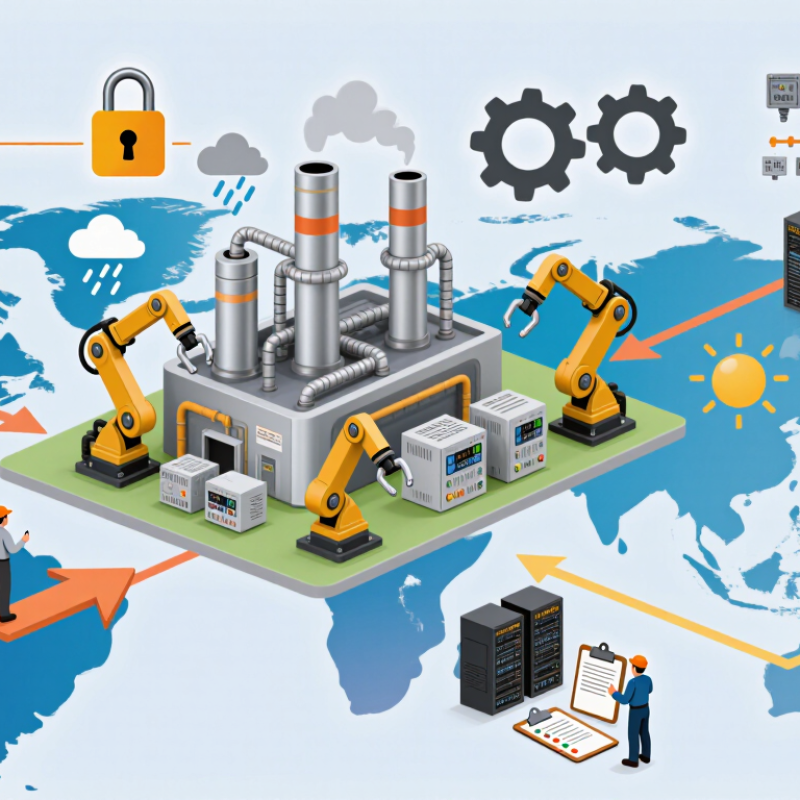
Defining automation control requirements is the real starting point for global sourcing. A low purchase price cannot repair an unclear control specification. Before contacting suppliers, document the machine’s tasks, operating speed, load range, and expected production hours. Include local voltage, frequency, ambient temperature, dust, humidity, and available network connections. Small details matter.
During factory acceptance testing, I have seen unclear alarm logic create long operator delays. Define every critical alarm, its response, and the required recovery time. Specify manual, automatic, and maintenance modes separately. The control system should record faults with timestamps and protect authorized settings. Keep it practical. Ask for wiring diagrams, software backups, communication protocols, and multilingual operating instructions. Cybersecurity requirements also need clear ownership, especially for remote access and data transfer.
Global sourcing adds another layer of risk. Confirm regional safety requirements and require documented test results before shipment. Define spare parts, diagnostic tools, training hours, and local technical support in the purchasing agreement. A supplier should explain how replacement components will be identified after five years. Our first specification included performance targets but ignored maintenance access. That assumption was wrong. Engineers should review the draft with operators and service technicians, not only purchasing staff. Leave room for improvement, but never leave safety functions vague.

Industrial robot density is a useful indicator of automation intensity when defining global-sourcing requirements for PLCs, HMIs, motion systems, safety controls, networking, commissioning, and maintenance support. Higher-density manufacturing markets generally require stronger interoperability, functional safety capability, local service coverage, spare-parts availability, and lifecycle support.
Data source: International Federation of Robotics, World Robotics 2024, industrial robot density reported for 2023. Values represent operational industrial robots per 10,000 manufacturing employees.
Global sourcing automation controls requires more than comparing prices. Regional standards can change the entire control architecture. In the European Union, Machinery Regulation (EU) 2023/1230 raises expectations for digital documentation and safety assessment. North American projects often require alignment with NFPA 79, while IEC 60204-1 remains common across many markets. These differences affect wiring, guarding, emergency stops, and certification evidence.
The International Federation of Robotics reported 541,302 industrial robots installed worldwide in 2023. That scale increases the need for repeatable, region-ready designs. A practical specification should map voltage, frequency, enclosure rating, ambient temperature, and fault-current limits before supplier selection. IEC 62443 also deserves attention where connected controls exchange production data. Cybersecurity is not only an information-technology issue. It can influence network segmentation, user access, and maintenance procedures. I have seen projects underestimate local service skills. The hardware worked, but troubleshooting documents did not.
Tips: Build a regional compliance matrix before requesting quotations. Record each required standard, test method, certificate, and responsible party. Keep spare parts common, but do not force identical components where local approvals differ. Ask suppliers for sample drawings and test records. A polished certificate is not proof of full system compliance. Validate the complete installation with a qualified local assessor. Small gaps matter.
Global sourcing in 2026 demands automation controls that fit different factories, skills, and production targets. Control architecture should be assessed before vendor discussions begin. A centralized system can simplify supervision across several lines. However, it may create a larger failure point. Distributed controls offer local resilience and faster machine response. They can also increase maintenance effort and training costs.
Vendor evaluation should include engineering support, documentation quality, spare-part access, and long-term compatibility. A low purchase price can hide expensive integration work. Ask for proven performance data from comparable production environments. Review how each system handles sensors, motion devices, safety functions, and data exchange. Integration options matter greatly. Open communication standards usually reduce dependence on one supplier. Still, “open” does not always mean easy. We have seen technically compatible systems require extensive testing.
Tips: Map every machine interface before selecting controls. Request a sample architecture, not only a sales presentation. Test data flow with realistic cycle times. Include local technicians in acceptance trials. Check support response across each operating region. Leave budget for updates and unexpected wiring changes. Small omissions become costly later. Document every assumption, even the uncomfortable ones.
A practical decision should balance performance, maintainability, cybersecurity, and lifecycle cost. The strongest architecture on paper may fail without trained people nearby. Regional sourcing also introduces different electrical practices and documentation habits. Treat those differences as design inputs, not minor details. Recheck the plan after a pilot installation. The first design is rarely perfect.
| Control architecture | Typical applications | Execution and strengths | Integration options | Global sourcing considerations |
|---|---|---|---|---|
| PLC-based control | Discrete machines, packaging lines, material handling, and machine-level sequencing. | Dedicated controller executes cyclic logic and I/O tasks. Commonly programmed using IEC 61131-3 languages; well suited to deterministic machine control. | Remote I/O, drives, and HMIs commonly connect through industrial Ethernet or fieldbus. OPC UA or an application gateway can provide supervisory data exchange where supported. | Check regional stock for CPU, I/O, power, and communication modules. Confirm lifecycle status, programming-software access, language support, and availability of local commissioning service. |
| PAC / modular controller | Larger machines or coordinated systems needing a mix of logic, motion, process functions, and distributed I/O. | Combines controller functions in a modular platform; capabilities vary by configuration. Can support larger I/O counts, multiple task types, and more extensive system coordination than a basic machine controller. | Often integrates with drives, motion networks, remote I/O, HMIs, and supervisory systems. Verify protocol, device-profile, and engineering-tool compatibility for each component. | Compare the cost and lead time of the complete bill of materials, not just the processor. Check module interchangeability, firmware dependencies, spare-parts coverage, and support across target regions. |
| DCS (distributed control system) | Continuous and batch processes such as utilities, chemical processing, and large process facilities. | Distributed controllers and operator stations are coordinated as a process-control system. Designed for plant-wide monitoring, alarms, and continuous operations. | Typically connects field instruments, control networks, operator stations, and historians. Interfaces to other systems may use OPC UA, gateways, or supported industrial protocols. | Assess project engineering capacity, migration path, installed-base dependencies, cybersecurity lifecycle, and long-term support. Site-wide licensing and engineering services can be significant sourcing factors. |
| Industrial PC / soft controller | Data-intensive machines, test systems, specialized motion, and applications that combine control with computing. | Runs control software on industrial computing hardware. Offers flexibility for data processing and software integration; real-time behavior depends on the platform, operating system, runtime, and configuration. | Can connect to industrial I/O, motion systems, databases, and IT applications. Confirm supported real-time networks, driver availability, and separation between control and general-purpose computing. | Validate hardware operating-temperature and vibration ratings, operating-system support, runtime licensing, cybersecurity patch process, and replacement strategy for the computing platform. |
| Safety-rated control | Emergency stops, machine guarding, safety interlocks, and other risk-reduction functions. | Implemented with safety relays or safety-rated controllers and components selected for the required risk reduction. Safety functions require a documented design and validation; a standard controller alone does not establish functional safety. | May use dedicated safety wiring or certified safety communication over an industrial network. Confirm that the complete path—including devices, network, and controller—is suitable for the intended safety function. | Check applicable machine and functional-safety requirements, certificates, component documentation, and local validation expertise. ISO 13849-1 and IEC 61508/IEC 62061 address different aspects of safety-related control-system design. |
| Evaluation dimension | What to verify | Practical sourcing question |
|---|---|---|
| Protocol fit | Required support for protocols such as PROFINET, EtherNet/IP, Modbus TCP, or OPC UA; protocol support is product- and configuration-specific. | Can the proposed controller communicate with the selected field devices and existing plant systems without an unsupported gateway? |
| Standards and cybersecurity | IEC 61131-3 relates to programmable-controller programming languages; IEC 62443 addresses cybersecurity for industrial automation and control systems. | What security updates, access controls, product documentation, and support periods are available for the proposed system? |
| Interoperability | Compatibility of engineering tools, device descriptions, firmware versions, network components, and data models. | Can the integrator demonstrate a working interface using the exact hardware, firmware, and software versions in the quotation? |
| Regional support and supply | Local technical support, authorized service coverage, regional inventory, export requirements, and product lifecycle information. | Which components have confirmed lead times, and what is the documented replacement or migration plan if a component is discontinued? |
| Total cost of ownership | Hardware, engineering tools, licenses, integration, training, spares, commissioning, and ongoing maintenance. | Does the quotation include the software licenses, cables, power supplies, communication modules, and engineering services required for a working system? |
Note: Protocol and feature availability varies by product, firmware, configuration, and regional offering. Confirm requirements against current technical documentation and validate safety functions through the applicable risk-assessment and validation process.
Choosing automation controls for global sourcing is not a lowest-quote exercise. Compare the full installed cost: controller, licenses, wiring changes, commissioning hours, spare parts, and technician travel. A low unit price can hide expensive integration work. Ask suppliers to price the same sample configuration, including software updates and replacement modules. Model currency movement and shipping delays over the expected service life. Exact forecasts are impossible. Still, assumptions should be visible.
Cybersecurity deserves equal weight. Request clear details on access controls, security updates, vulnerability reporting, and approval and logging of remote support sessions. Test recovery from a simulated controller failure; polished documentation cannot prove backups restore cleanly. Test it live. Check where support staff are located, which languages they can use, and whether response coverage matches plant shifts. Ask for documented escalation times, not just a general promise. Map critical components to production sites and alternate sources. A second supplier helps only if firmware, tooling, and qualification records are usable. I would revisit the scoring after a pilot, since actual response times and spare-part lead times may differ from tender claims.
2026 How to Choose Automation Controls for Global Sourcing
Selecting, Testing, and Scaling the Best Control Solution
Selecting automation controls starts with the production task, not the supplier’s sales presentation. Define required cycle time, input types, safety functions, temperature range, and communication needs. A control panel may perform well in a clean workshop but fail near dust, vibration, or humidity. I prefer a written specification with measurable limits. It gives engineering teams a common reference across countries.
Testing should imitate real factory conditions. Run repeated cycles with loaded motors, emergency stops, sensor faults, and power interruptions. Record response time, alarm accuracy, cabinet temperature, and recovery behavior. During one early trial, our team tested normal operation too heavily and fault recovery too lightly. That gap appeared later on the production floor. The lesson was uncomfortable but useful. Test the mistakes operators actually make.
Scaling requires more than ordering additional units. Check component availability, replacement procedures, software access, training materials, and local technical support. Keep identical wiring labels and documented parameter settings across sites. A small pilot can reveal major differences in voltage stability, network quality, and operator habits. Review test logs with manufacturing and maintenance staff before approving wider deployment. Leave room for controlled adjustment. Perfect standardization is rarely realistic. Reliability grows when changes remain visible, tested, and easy to reverse.