As manufacturers prepare for 2026, reliable automation and control systems remain central to safer, faster, and more flexible production. Suppliers now compete across programmable logic controllers, distributed control systems, robotics, industrial software, sensors, and secure networking. The strongest providers do more than sell hardware. They support commissioning, operator training, lifecycle maintenance, and practical integration with existing equipment.
This guide examines leading global suppliers through an evidence-based lens. It considers product reliability, cybersecurity practices, interoperability, service coverage, engineering expertise, and documented industrial performance. Real factory conditions matter. A controller may perform well in a clean laboratory but struggle beside heat, vibration, dust, or unstable connectivity. Installation time matters too. So do spare-part availability and the quality of technical support after deployment.
Markets change quickly. No ranking is permanent. Vendor strengths also vary by industry, region, plant size, and project complexity. A supplier that suits a pharmaceutical facility may not fit a steel mill or a small packaging line. This overview therefore avoids relying on brand visibility alone. It encourages readers to compare certifications, reference projects, integration capabilities, total ownership costs, and long-term upgrade plans. Some published claims are difficult to verify, and that deserves attention. Careful buyers should request current documentation, test critical functions, and speak with users operating similar systems. The goal is not to name one universal winner. It is to identify suppliers that can deliver dependable control, measurable efficiency, and responsible support throughout an automation project’s working life.
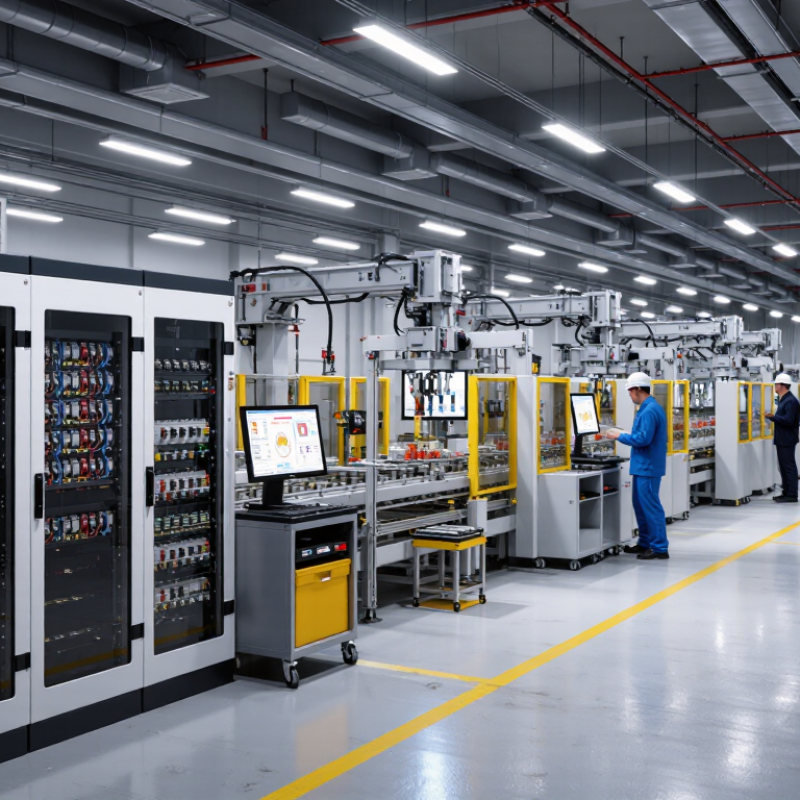
Automation and control systems connect machines, measurements, software, and human decisions. Sensors measure temperature, pressure, speed, or product position. Controllers compare those readings with programmed targets. Actuators then adjust valves, motors, heaters, or robotic movements. Human-machine interfaces show the process on a nearby screen. Control networks carry commands between field devices, controllers, and supervisory software. The system should react quickly, record evidence, and fail safely.
It is more than factory robotics. A modern system may coordinate a conveyor, detect a jam, stop a motor, and alert an operator within seconds. The International Federation of Robotics reported 541,302 new industrial robots installed worldwide in 2023. Its World Robotics 2024 report also recorded more than 4.28 million operating industrial robots. Those figures show growing automation demand, but robot numbers alone cannot measure control quality. Integration, maintenance, and operator training matter just as much.
When comparing suppliers in 2026, buyers should examine lifecycle support, open communication protocols, cybersecurity practices, and replacement-part availability. NIST’s Guide to Operational Technology Security stresses that safety, reliability, and security must be managed together. A low purchase price can become expensive during downtime. That assumption is convenient, but incomplete. In a plant assessment, I would inspect alarm history, network diagrams, cabinet labeling, and recovery procedures. Small gaps often reveal larger risks. No system is perfect. A useful design leaves room for testing, revision, and honest human judgment.

2026 Top Automation and Control Systems Suppliers?
How to Assess Automation and Control System Suppliers
Choosing a top supplier in 2026 requires more than comparing product catalogs. A reliable assessment starts with your process, operating conditions, and expansion plans. Ask suppliers to map their proposed control architecture to a real production scenario. For example, request a response to a sensor failure during a night shift. Their answer should explain alarms, manual overrides, data recovery, and operator training. Vague promises are warning signs.
Tips: Visit a reference site before signing a major contract. Watch how operators use the system during routine production. Talk with maintenance staff, not only sales representatives. Review documented uptime, training records, and support response times. Do not accept polished slides as proof. Independent feedback often reveals weaknesses that demonstrations hide.
Technical capability matters, but service evidence matters more. Review commissioning records, spare-parts planning, cybersecurity controls, and software update procedures. Ask who owns configuration changes after installation. A dependable supplier documents version control and tests changes before production use. Request measurable service levels with clear response targets. Also assess financial stability and local technical coverage. I would not ignore cultural fit. Some evaluations fail here. A supplier may meet every technical requirement yet communicate poorly under pressure. Leave room for a pilot project. A limited trial can expose integration gaps and show that your own requirements were incomplete. That is uncomfortable, but useful.
Leading automation and control system suppliers in 2026 are judged by more than hardware catalogs. The strongest providers combine dependable controllers, secure industrial networks, clear software interfaces, and responsive technical support. They also understand production realities, from dusty packaging lines to temperature-sensitive processing rooms.
On a factory floor, this means fewer unexplained stops and faster troubleshooting. Small details matter. A supplier should provide tested integration plans, practical training, spare-part guidance, and readable maintenance records. During supplier reviews, engineers can request a live demonstration using realistic alarms, sensor failures, and production changes. This reveals more than a polished presentation.
Reliable suppliers also measure performance after installation. Useful evidence includes response times, system availability, upgrade procedures, and documented cybersecurity controls. References from similar facilities remain valuable, especially when they describe problems rather than perfect results. No provider is flawless. That matters.
Some proposals still promise effortless automation, which deserves careful questioning. A system may perform well in a laboratory but struggle with older machines, inconsistent wiring, or limited operator training. Experienced suppliers acknowledge these constraints and design practical migration steps. They should explain ownership costs, software dependencies, and future expansion without hiding technical weaknesses.
The leading suppliers in 2026 will likely be those that support people as carefully as equipment. Their specialists listen on-site, document decisions, and adjust designs when operating conditions change. That human reliability can be difficult to measure, yet it often determines whether a control project remains stable after commissioning.
2026 Top Automation and Control Systems Suppliers: Key Products, Technologies, and Industry Applications
The strongest 2026 suppliers will offer connected control platforms, not isolated machines. Core products include PLCs, distributed control systems, SCADA software, industrial robots, sensors, drives, and safety controllers. International Federation of Robotics’ World Robotics 2024 report recorded 541,302 industrial robot installations in 2023. That figure shows continuing demand for flexible production cells, especially in electronics, automotive, logistics, and battery manufacturing.
Edge computing now brings faster decisions closer to machines. Industrial networks, machine vision, digital twins, and predictive maintenance support this shift. The World Economic Forum’s Future of Jobs Report 2025 found that 58% of employers expect robotics and autonomous systems to transform business by 2030. Suppliers serving food processing, pharmaceuticals, utilities, and buildings must also provide traceability, energy monitoring, and secure remote access. A compact control cabinet can now connect temperature probes, motors, cameras, and cloud analytics.
However, integration remains harder than product brochures suggest. Legacy equipment often speaks different protocols. A polished dashboard may still display weak data. Practical suppliers provide commissioning support, lifecycle training, cybersecurity assessments, and open interfaces. NIST SP 800-82 emphasizes separating industrial control environments and managing remote access carefully. That guidance matters when one compromised account could interrupt a production line. The best technology is not always the newest. It is the system operators can understand, maintain, and safely improve.
Electrical and electronics manufacturing represented the largest application segment for industrial automation, followed by automotive, metal and machinery, plastics and chemicals, and food manufacturing. These sectors typically require PLCs, motion control, industrial robots, machine vision, safety systems, and industrial networking.
Data shown in thousands of industrial robot installations worldwide by industry in 2023. Source: International Federation of Robotics, World Robotics 2024. Values are rounded.
In 2026, automation suppliers will compete on intelligence, flexibility, and measurable plant performance. Edge-based artificial intelligence will process sensor data near machines. This can reduce delays and support faster fault detection. However, artificial intelligence is not a magic fix. Poor sensor quality still produces poor decisions.
Interoperability will shape supplier selection. Manufacturers want controllers, robots, drives, and software to exchange data smoothly. Open communication standards can reduce integration time and avoid isolated systems. Cybersecurity will receive equal attention. Secure access, network segmentation, and continuous patching are becoming purchasing requirements. Energy monitoring will also move closer to the machine. Operators may track motor loads, compressed-air losses, and peak demand from one interface.
From plant assessments, the strongest suppliers usually explain maintenance needs clearly. They provide training, spare-parts planning, and realistic service response times. Digital twins can improve commissioning, but their value depends on accurate operating data. A polished demonstration proves very little. Total ownership cost matters more than a low starting price. Smaller, modular systems may attract factories facing uncertain production volumes. Supply-chain resilience will influence component choices, especially for critical controllers and sensors. The market remains imperfect. Some suppliers promise autonomy before plants have reliable data foundations. Buyers should test claims with short pilot projects, documented performance targets, and direct operator feedback. Short trials reveal uncomfortable details.
| Market Dimension | Verified Market Indicator | 2026 Supplier-Market Implication | Relevant Evaluation Criteria | Source and Data Year |
|---|---|---|---|---|
| Industrial robotics demand | 541,302 industrial robots were installed worldwide in 2023, the second-highest annual level recorded at that time. | Suppliers with scalable robot, motion, safety, and control portfolios are positioned to benefit from continued automation investment. | Robot compatibility; motion performance; safety integration; commissioning speed; lifecycle service. | International Federation of Robotics, World Robotics 2024 |
| Regional manufacturing capacity | Asia accounted for approximately 70% of global industrial robot installations in 2023, while Europe and the Americas represented smaller but mature automation markets. | Global suppliers need localized engineering, service coverage, spare-parts availability, and regulatory support rather than a single standardized delivery model. | Regional support capacity; delivery lead time; local compliance; multilingual software and documentation. | International Federation of Robotics, World Robotics 2024 |
| Artificial intelligence in operations | The global AI market is forecast to expand rapidly through 2030, with manufacturing identified as a major adoption area for predictive maintenance, quality inspection, and process optimization. | Competitive differentiation will increasingly depend on practical AI features connected to real-time control data, not on standalone analytics demonstrations. | Edge processing; data governance; model explainability; integration with historians, PLCs, and MES platforms. | World Economic Forum, Future of Jobs Report 2025 |
| Industrial cybersecurity | The European Union Cyber Resilience Act entered into force in December 2024; vulnerability-reporting obligations begin in September 2026, with broader obligations phased in later. | Security-by-design, vulnerability disclosure, software-bill-of-materials management, and long-term patch support will become important supplier-selection factors. | Secure development lifecycle; identity management; network segmentation; patch policy; incident response. | European Commission, Cyber Resilience Act |
| Workforce and skills | In the 2025 global employer survey, 63% of employers identified skills gaps as the largest barrier to business transformation, and 85% planned to prioritize workforce upskilling. | Suppliers offering simulation, low-code configuration, remote assistance, training, and simpler user interfaces can reduce dependence on scarce specialists. | Training ecosystem; usability; digital work instructions; remote diagnostics; partner certification. | World Economic Forum, Future of Jobs Report 2025 |
| Energy efficiency and emissions | Global electricity demand is expected to grow strongly through 2026, with industry remaining one of the largest electricity-consuming sectors. | Energy monitoring, efficient drives, optimized motion profiles, and production-level carbon reporting will increasingly influence purchasing decisions. | Energy visibility; variable-speed control; regenerative capability; lifecycle energy consumption; emissions data. | International Energy Agency, Electricity 2024 |
| Open and interoperable architectures | Industrial interoperability standards increasingly support secure information exchange across field devices, control systems, manufacturing applications, and enterprise platforms. | Buyers are likely to favor suppliers that reduce integration lock-in and provide documented interfaces across multi-vendor production environments. | Standard protocols; API availability; data modeling; backward compatibility; integration engineering effort. | OPC Foundation, OPC UA Technology Overview |
| Resilience and total cost of ownership | Recent supply-chain disruptions have increased attention on component availability, inventory visibility, dual sourcing, and continuity planning across industrial operations. | The strongest 2026 suppliers will compete on uptime, service responsiveness, upgrade paths, and predictable lifecycle costs—not only initial equipment price. | Mean time to repair; spare-parts coverage; warranty terms; installed-base support; lifecycle cost transparency. | OECD, Economic Outlook, Volume 2024 Issue 2 |