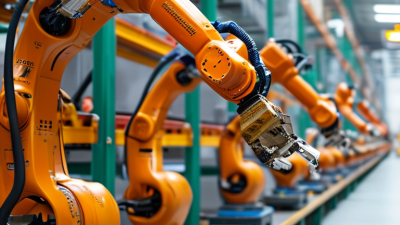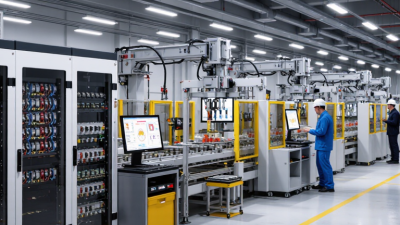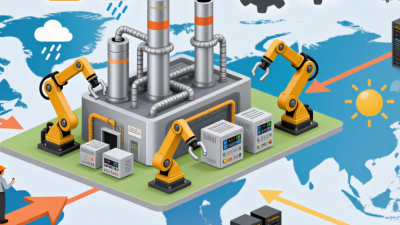
Choosing among the 10 Best Automation and Control Systems for Global Buyers requires more than comparing features or software dashboards. Buyers must examine uptime, cybersecurity, interoperability, lifecycle support, and regional service capacity. A polished interface means little when a replacement drive waits six weeks at customs.
The International Federation of Robotics reported 541,302 industrial robots were installed worldwide in 2023. The global operational stock reached approximately 4.28 million units. Rockwell Automation’s 2024 State of Smart Manufacturing report also found that 95% of manufacturers had invested, or planned to invest, in artificial intelligence and machine learning within five years. These figures show growing demand for connected automation and control systems. They also reveal a difficult reality: adoption is accelerating faster than many organizations can train their teams.
Joseph Engelberger, widely recognized as the father of industrial robotics, said, “I can’t think of a more exciting field than robotics.” His optimism remains relevant, but enthusiasm cannot replace engineering discipline. The strongest systems connect programmable logic controllers, supervisory control, safety functions, sensors, and analytics without creating fragile dependencies.
This guide evaluates leading solutions through a global buyer’s lens. It considers scalability, integration, vendor stability, technical support, energy visibility, and total ownership cost. No ranking is perfect. A system that fits a high-volume automotive plant may disappoint a food processor with strict cleaning routines. Readers should validate performance through site trials, reference checks, and cybersecurity reviews before making a purchase.
What Automation and Control Systems Include
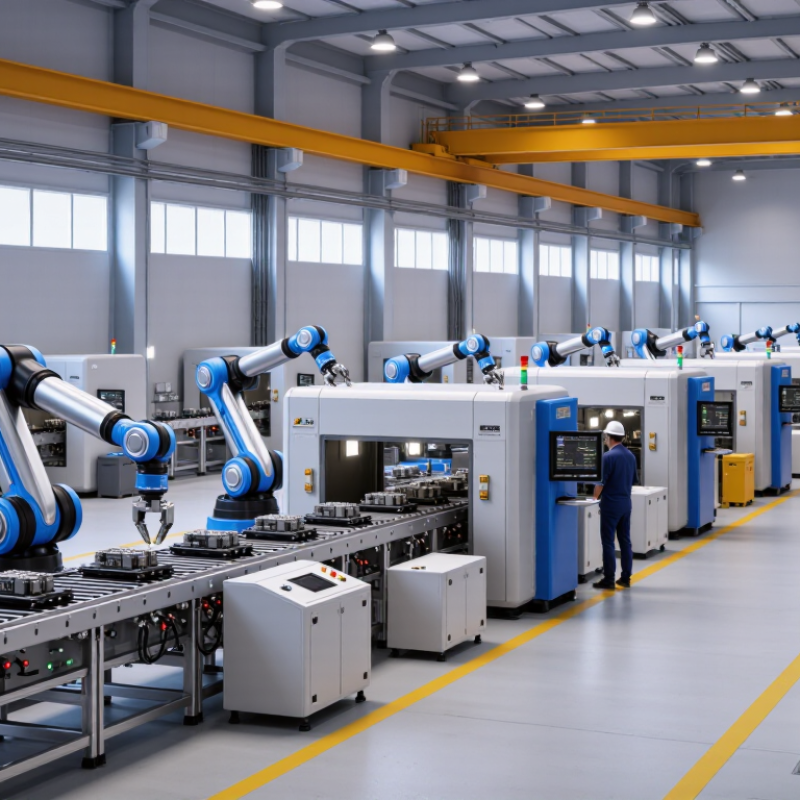
Automation and control systems connect sensing, decision-making, movement, and production data. A temperature sensor may detect a 5°C change. A programmable logic controller then adjusts a valve or motor. Human-machine interfaces display alarms, trends, and operating instructions for staff.
The complete system often includes sensors, actuators, controllers, motor drives, safety circuits, industrial networks, and supervisory software. Larger facilities may add distributed control systems, manufacturing execution software, and cloud-based analytics. The boundary is not always clean. A packaging line can use one controller, while a refinery may distribute control across hundreds of field devices. Cybersecurity also matters. The 2023 International Federation of Robotics report recorded 541,302 industrial robot installations worldwide in 2022, showing the scale of connected production equipment. More connections create more data, but also more points requiring protection.
Global buyers should inspect practical details, not only software features. Check voltage ranges, communication protocols, spare-part access, environmental ratings, and local service skills. IEC 62443 guidance emphasizes risk-based security across systems, networks, and suppliers. That advice is useful, though specifications can still become vague. A cabinet may look complete, yet lack clear recovery procedures after a network fault. Test alarm response, manual override, data backups, and operator training before shipment. Small omissions become expensive downtime.
| System Type | What It Includes | Primary Control Function | Typical Applications | Common Communication Standards | Scalability | Main Selection Considerations |
|---|---|---|---|---|---|---|
| Programmable Logic Controller System | Central processing unit, digital and analog input/output modules, power supply, programming software, communication modules, and operator interface. | Executes sequential logic, interlocking, timing, counting, monitoring, and machine control. | Packaging equipment, conveyors, assembly lines, water treatment, material handling, and general manufacturing. | IEC 61131-3 Modbus OPC UA Industrial Ethernet | Small standalone machines to multi-line production systems. | I/O capacity, programming environment, scan time, environmental rating, cybersecurity, spare-part availability, and local technical support. |
| Programmable Automation Controller System | High-performance controller, modular I/O, motion and process-control functions, data-processing capability, visualization tools, and industrial networking. | Combines logic, motion, measurement, data handling, and advanced control in one platform. | Complex machinery, high-speed production, semiconductor equipment, printing, and multi-axis systems. | IEC 61131-3 OPC UA MQTT Real-time Ethernet | High; suitable for distributed machines and integrated production cells. | Processing performance, synchronized motion, software compatibility, data architecture, lifecycle support, and integration with enterprise systems. |
| Distributed Control System | Operator stations, engineering station, redundant controllers, remote I/O, process servers, alarm management, historian, and industrial networks. | Continuously controls large process operations using regulatory, sequence, alarm, and supervisory control functions. | Chemical processing, power generation, refining, pharmaceuticals, pulp and paper, and large utilities. | OPC UA Modbus TCP Foundation Fieldbus Industrial Ethernet | Very high; designed for thousands of control loops and distributed plant assets. | Redundancy, control-loop performance, alarm philosophy, validation requirements, operator usability, cybersecurity, and long-term maintenance. |
| Supervisory Control and Data Acquisition System | Supervisory servers, remote terminal units, programmable controllers, graphical interfaces, alarm management, historian, reporting, and remote communications. | Provides centralized monitoring, data collection, supervisory commands, and event recording. | Electricity networks, pipelines, water distribution, transportation infrastructure, and remote facilities. | DNP3 IEC 60870-5-104 Modbus OPC UA | Very high; can connect geographically dispersed assets. | Communications reliability, time synchronization, remote access security, data retention, alarm quality, and support for intermittent connectivity. |
| Motion Control System | Motion controller, servo drives, motors, encoders, mechanical transmission, safety functions, coordinated axes, and engineering software. | Controls position, speed, torque, acceleration, synchronization, and coordinated movement. | Robotics, packaging, labeling, pick-and-place equipment, machine tools, and converting machinery. | EtherCAT CANopen PROFINET Real-time Ethernet | From one axis to highly coordinated multi-axis machinery. | Position accuracy, cycle time, synchronization, motor compatibility, mechanical load, tuning tools, safety integration, and serviceability. |
| Computer Numerical Control System | CNC controller, machine-tool interface, servo drives, spindle control, axis feedback, tool management, machining software, and operator panel. | Converts programmed tool paths into precise cutting, drilling, milling, turning, or grinding movements. | Metalworking, aerospace components, automotive parts, medical devices, and precision manufacturing. | ISO 6983 STEP-NC OPC UA Industrial Ethernet | Suitable for single machines, flexible cells, and connected machining networks. | Number of axes, interpolation performance, accuracy, tooling support, program compatibility, machine integration, and operator training. |
| Building Automation and Control System | Sensors, actuators, field controllers, supervisory software, energy meters, HVAC controls, lighting controls, access interfaces, and scheduling tools. | Regulates temperature, ventilation, humidity, lighting, occupancy, energy use, and equipment schedules. | Commercial buildings, hospitals, airports, hotels, campuses, warehouses, and data centers. | BACnet KNX Modbus M-Bus | From individual buildings to portfolios of connected facilities. | Interoperability, energy performance, cybersecurity, occupant comfort, commissioning quality, retrofit compatibility, and local regulations. |
| Safety Instrumented System | Safety-rated logic solver, independent sensors, final control elements, emergency shutdown functions, safety relays, diagnostics, and proof-test procedures. | Detects hazardous conditions and places equipment or processes into a defined safe state. | Oil and gas, chemical plants, power facilities, machinery guarding, burner management, and critical infrastructure. | IEC 61508 IEC 61511 IEC 62061 ISO 13849 | Scales from machine-level protection to plant-wide safety functions. | Required safety integrity level, independence from basic control, diagnostic coverage, proof-test interval, certification, and lifecycle documentation. |
| Energy Management and Microgrid Control System | Energy meters, power-quality instruments, supervisory controller, load-management software, renewable-energy interfaces, storage controls, forecasting tools, and reporting functions. | Balances generation, storage, loads, demand, power quality, and operating costs. | Factories, commercial sites, campuses, renewable installations, remote facilities, and critical loads. | IEC 61850 Modbus OpenADR MQTT | Scales from a single facility to multi-site energy networks. | Measurement accuracy, grid-code compliance, islanding capability, cybersecurity, forecasting quality, storage compatibility, and return on investment. |
| Industrial Robot and Cell Control System | Robot controller, robot arm, end-of-arm tooling, vision system, cell controller, safety equipment, fixtures, conveyors, and production software. | Coordinates robot motion, material handling, inspection, tooling, sequencing, and safe interaction with surrounding equipment. | Welding, palletizing, assembly, painting, machine tending, inspection, and warehouse automation. | OPC UA PROFINET EtherNet/IP ROS 2 | From a single robot cell to synchronized multi-cell production lines. | Payload, reach, repeatability, cycle time, vision compatibility, safety zoning, programming skills, maintenance access, and process flexibility. |